Thursday, February 23, 2006

LIBERIA: Sexual abuse of children still rampant, report says


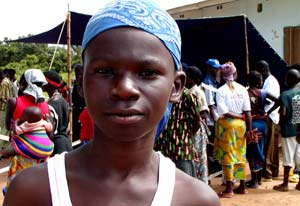
MONROVIA, 22 February (IRIN) - Child rape - with victims as young as age four - is common across post-war Liberia, topping a list of abuses against children over the last year, a rights monitoring group says.

The lack of effective laws to combat rape complicates the problem, the National Child Rights Observation Group (NACROG) said in a report released this week.

"It is quite frustrating and unimaginable that a grown-up man will choose to completely damage a young child in the name of sex and enjoys impunity simply because laws are weak, ancient and non-effective," NACROG's report said.

Liberia passed a new rape law late last year, for the first time officially making the act illegal, but activists say the law still needs to be strengthened and the legal system bolstered.

NACROG said 48 cases of rape against children ages four to 13 were documented in the last year in eight of Liberia's 15 counties. The group cited at least seven cases of gang rape against children in the capital, Monrovia.

"Two instances of rape leading to death were recorded with no punishment for the perpetrators," NACROG coordinator Jerolinmek Piah told IRIN.

Of the 48 cases, 26 were either settled out of court or abandoned by the alleged victims, NACROG said, while 16 cases are pending and six have been settled in court.

The new law passed by parliament in December made all rape illegal; previously only gang rape was seen as a criminal offence. President Ellen Johnson-Sirleaf, who was sworn in last month as Africa's first elected female president, said at the time, "Nobody will abuse our girls and women and get away with it."

The scourge of sexual abuse has long gripped Liberia, where rape against civilians was rampant during the 14-year war that ended in 2003. And the country's justice and security structures are crawling back after years of combat and chaos. The UN mission in Liberia, UNMIL, said in a report in January that the legal system is shaky at best, and that re-establishing it "represents the single greatest challenge to lasting peace [in Liberia]."
UNMIL last week launched an awareness campaign, encouraging victims of rape to report the crime to police and seek medical assistance.

Lois Bruthus, president of the Association of Female Lawyers of Liberia (AFELL), told reporters on Tuesday that the criminal court is flooded with rape cases, causing trial delays. AFELL is calling for a court devoted to rape charges. "We believe that the best option would be the setting up of a specialised court that will handle only rape cases," Bruthus said. "We are going to move on to petition the legislature for the creation of such a court."

Anti-rape activists say one of the problems even in the new law is that some rapists can still be freed on bail. Piah of NACROG called for bail to be eliminated for all rapes, not just for gang rape or other extreme cases. The law signed in December says punishment and possibility of bail depend on the severity of the offence. AFELL's Bruthus said her group would spearhead an effort to eliminate bail for all accused rapists.


Source: Alternet

Wednesday, February 22, 2006

Fix the diagnosis not the children


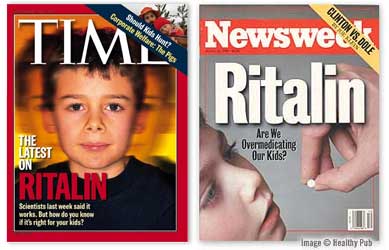
THE news that an Edinburgh academic believes Scottish youngsters are handed out "mind-altering" drugs for hyperactivity when in fact their bad behaviour is nothing more than a natural part of growing up will, I'm sure, have alarmed the thousands of parents whose children are currently taking medication such as Ritalin.

Edinburgh University's Dr Gwynedd Lloyd has said decisions to hand out drugs are often made so that parents don't feel guilty about their unruly children and that there is widespread abuse of drugs such as Ritalin.


In fact, Attention Deficit Hyperactivity Disorder has been a source of contention ever since the term was first adopted by committee at the American Psychiatric Association back in 1987.

As the multi-million-dollar ADHD industry has grown, so has the amount of literature describing fundamental flaws in logic and research and pointing out that claims of a neurobiological origin have never been substantiated.

For example, a debate in the British Journal of Psychiatry in 2004 observed: "Fundamental to the discussion are questions about whether the diagnosis of ADHD actually holds water and what it is that psychiatrists are trying to treat... there are no specific cognitive, metabolic or neurological markers and no medical tests for ADHD".

Ritalin is in fact a Class B drug which has the same pharmacology as cocaine and one can safely assume any parent would have deep concerns about their child taking it - if they are aware of all the facts. But parents are not informed of the continuing division of medical opinion surrounding ADHD and its validity as a diagnostic concept and the nature of the drugs prescribed.

Although many children have been "medically diagnosed" with ADHD, very few if any have been subject to basic procedures and medical tests to establish a correct differential diagnosis - ie finding out what causes the symptoms.

Clearly, many factors influence children's behaviour: poverty, divorce, overcrowded classrooms, nutritional problems and more. It is also true that many factors influence prescription rates for drugs used to influence children's behaviour. The rise in prescriptions rates - last year in Scotland prescriptions were up 11 per cent - reflects an increase of publicity for ADHD as a condition afflicting children, and the number of children so categorised.

ADHD has generated huge profits for the pharmaceutical industry but I would argue this is against a background of poor-quality research, publication bias and payments to some of the top academics in this field. Thus the mainstream dogma on ADHD is contaminated and misleading.
This division of medical opinion is reflected in a wide variation in prescription rates in different localities in Scotland - from 0.5 per cent to 26 per cent - indicating variations in the acceptance of this as a diagnosis by different practitioners or clinics.

The largest meta-analysis study, the results of which were published in September last year by the Oregon Drug Effectiveness Review Project, analysed 2287 pieces of research - virtually every investigation ever done on ADHD drugs - to reach its conclusions: it found no evidence to support the claims about these drugs' safety or the legitimacy of the ADHD diagnosis.

A parent who is not aware of these points cannot be considered sufficiently informed to give legally meaningful informed consent to treatment proposed for their child. And in fact, the GMC requires as a standard of practice that UK medical practitioners obtain informed consent before treatment.
To continue to medicate children as young as two years old with powerful mind-altering drugs is a public health scandal.

To give such drugs to toddlers still in nappies who have not yet attended nursery school and whose brains and central nervous systems are still developing, is nothing more than a form of social control and fascism. Few of us would like to see the word "junkie" attached to any of our children in the illicit sense, yet we are happy to give them mind-altering drugs, whose long-term consequences have yet to be determined.

Is self-control, self-monitoring, self-regulation and good diet, a thing of the past? Will our kids remain the shiny happy people we had hoped for with such medical intervention? Only time will tell but there are those who would prefer to see the psychiatrists and drug companies drugged and institutionalised as a better cure-all than the drugging of children for profit.

By Janice Hills
• Janice Hill runs Overload Network, a support group for parents with hyperactive children

http://news.scotsman.com/opinion.cfm?id=274972006

Thursday, February 16, 2006

Spanking: Facts and Fiction


Definitions:
Corporal punishment:
Synonymous with “physical punishment.”." It means the intentional infliction of pain on the body for purposes of punishment or controlling behavior. It includes slapping, spanking, hitting with objects, pinching, shaking, and forcing to stand for long periods of time.

Spanking: Hitting with the flat of the hand usually on the buttocks for punishment or for stopping a behavior.

In the United States, spanking as punishment has shown a long-term decline. In the 1950's, ninety-nine percent of parents supported the use of corporal punishment of children. In recent years that number has fallen. Surveys generally report about fifty percent of parents supporting its use. Studies show that a majority of parents who use corporal punishment feel badly about it and don't think it works to improve behavior.

Parents who support spanking often use one of the following arguments:


  • Spanking is an effective way to manage behavior.
  • I got hit when I was a kid and I turned out OK.
  • If we don’t spank children, they’ll grow up rotten.
  • The bible says, “Spare the rod and spoil the child”
Look at the facts:
Spanking argument #1 - “Spanking is an effective way to manage behavior”


Hitting a small child will usually stop misbehavior. However, other ways of discipline such as verbal correction, reasoning, and time-out work as well and do not have the potential for harm that hitting does. Hitting children may actually increase misbehavior. One large study showed that the more parents spanked children for antisocial behavior, the more the antisocial behavior increased (Straus, Sugarman, & Giles-Sims, 1997). The more children are hit, the more likely they are to hit others including peers and siblings and, as adults, they are more likely to hit their spouses (Straus and Gelles, 1990; Wolfe, 1987). Hitting children teaches them that it is acceptable to hit others who are smaller and weaker. “I'm going to hit you because you hit your sister” is a hypocrisy not lost on children.

Spanking argument #2 - “I got hit when I was a kid and I turned out OK”
Being spanked is an emotional event. Adults often remember with crystal clarity times they were paddled or spanked as children. Many adults look back on corporal punishment in childhood with great anger and sadness. Sometimes people say, “I was spanked as a child, and I deserved it”. It is hard for us to believe that people who loved us would intentionally hurt us. We feel the need to excuse that hurt. Studies show that even a few instances of being hit as children are associated with more depressive symptoms as adults (Strauss, 1994, Strassberg, Dodge, Pettit & Bates, 1994). A landmark meta-analysis of 88 corporal punishment research studies of over six decades showed that corporal punishment of children was associated with negative outcomes including increased delinquent and antisocial behavior, increased risk of child abuse and spousal abuse, increased risk of child aggression and adult aggression, decreased child mental health and decreased adult mental health (Gershoff, 2002). While most of us who were spanked “turned out OK”, it is likely that not being spanked would have helped us turn out to be healthier.
Spanking Argument #3 - “If we don't spank children, they'll grow up rotten”
Children in seventeen countries (2005) are growing up without being hit in homes, in daycare or in schools. Norway, Sweden, Denmark, Austria, Finland and other countries that have banned corporal punishment of children in general have low rates of interpersonal violence compared to the United States. Critics predicted that Swedish youth would grow up more unruly after parents stopped spanking because of the l979 corporal punishment ban. Dr. Joan Durrant who studied effects of the ban for l5 years reported that this did not happen. Her studies indicate youth did not become more unruly, under socialized or self-destructive following the ban. In fact, she said most measures demonstrated a substantial improvement in youth well-being (Durrant, 2000). Professor Adrienne Haeuser who studied these educational laws in Europe in 1981 and 1991 said “Children are receiving more discipline since the law in Sweden passed. Parents think twice and tend to rely more on verbal conflict resolution to manage their children”. Discipline is important. Discipline means “to teach”. We need more discipline of children such as explaining and reasoning, establishing rules and consequences, praising good behavior in children and being good models for or children. Such methods develop a child's conscience and self-control. Children who experience teaching discipline are less likely to misbehave and more likely to become self-disciplined adults.
Spanking Argument #4 - “The bible says 'Spare the rod and spoil the child' and I must obey God”
Spanking is deeply rooted in the history and culture of the United States. The bible is often used to support, even perhaps to require, that parents use corporal punishment on children. Many clergy today are speaking out against that interpretation of scripture. The Reverend Dr. Thomas E. Sagendorf, retired Methodist Minister, says the following “I can find no sanction in the teaching of Jesus or the witness of the New Testament to encourage the practice of corporal punishment at home, school or anywhere else. A number of popular voices take a different view, often quoting Old Testament scriptures to prove their point. Those who subscribe to this argument misunderstand and misuse scripture. A similar method of selective reading could just as well be used to justify slavery, suppression of women, polygamy, incest and infanticide”. At its General Conference in Pittsburgh, Pennsylvania in April and May, 2004, the United Methodist Church passed two resolutions against corporal punishment in homes, schools and child-care. The United Methodist Church is the second largest Protestant denomination in the United States.
Conclusion
Look at the facts. Accumulated research supports the ineffectiveness and harm of corporal punishment. Children who are spanked most are more likely to be aggressive and hit others. Children hit for antisocial behaviors are more likely to increase those misbehaviors. Hitting children teaches acceptance of violence. While most of us who were spanked as children grow up to be healthy adults, spanking caused anxiety, contributed to feelings of helplessness and humiliation, and often provoked anger and a desire for revenge, feelings which have usually been repressed in adulthood but may lead to depression, adult violence, and hitting our own children. Effective discipline exists. It does not involve hitting and humiliating children.
References and Resources
Durrant, Joan E. (2000). “Trends in Youth Crime and Well-Being Since the Abolition of Corporal Punishment in Sweden”, Youth and Society. Youth and Society, Volume 31, 437-455.
Gershoff, Elizabeth (2002) “Corporal Punishment by Parents and Associated Child Behaviors and Experiences: A Meta-Analytic and Theoretical Review”, Psychological Bulletin 2002. Vol. 128, No. 4 539-579. American Psychological Association.
Greven, Philip. (1992). Spare the Rod: The religious roots of punishment and the psychological impact of physical abuse. Vintage Books.
Miller, Alice. (1990) For your own good: Hidden cruelty in child-rearing and roots of violence. Farrar, Straus & Giroux, LLC.
Straus, M.A., Sugarman, D.B., & Giles-Sims (1997). “Corporal punishment by parents and subsequent antisocial behavior in children”. Archives of Pediatrics and Adolescent Medicine, 155, 761-767.
Straus, M.A., & Gelles, R.J. (Eds.). (1990) “Physical violence in American families: Risk factors and adaptions to violence in 8,145 families”. New Brunswick, NJ: Transactions.
Straus, M.A. (1994). Beating the devil out of them: Corporal punishment in American families. San Francisco, CA: New Lexington Press.
Strassberg, Z., Dodge, K.A., Pettit, G.S., & Bates, J.E. (1994). “Spanking in families and subsequent aggressive behavior toward peers by kindergarten students”. Development and Psychopathology, 6, 445-461.
Wolfe, D.A. (1987). Child abuse: Implications for child development and psychopathology . Newbury Park, CA: Sage
Author: Nadine Block, Director of the Center for Effective Discipline and co-chair of EPOCH-USA July 2005.
http://www.stophitting.com/disathome/factsAndFiction.php
END PHYSICAL PUNISHMENT OF CHILDREN (EPOCH-USA)

Tuesday, February 14, 2006

IRAQ: Children's mental health affected by insecurity, say specialists

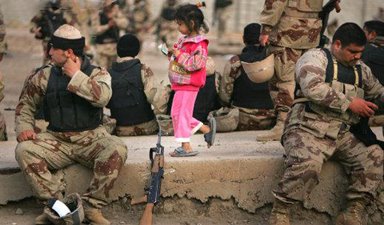
The Association of Psychologists of Iraq (API) has released a report stating that the US-led invasion and occupation of the country have greatly affected the psychological development of many Iraqi children.

"Children in Iraq are seriously suffering psychologically with all the insecurity, especially with the fear of kidnapping and explosions," said API spokesman Maruan Abdullah. "In some cases, they're found to be suffering extreme stress."


More than 1,000 children were interviewed countrywide over the past four months for the study, the findings of which were released on 5 February.

According to Abdullah, the survey was undertaken after a noticeable increase in the number of children seeking psychological counselling, many of whom were found to have learning difficulties.

"It was incredible how strong the results were," said Abdullah. "The only things they have on their minds are guns, bullets, death and a fear of the US occupation."

Of the children examined, 92 percent were found to have learning impediments, largely attributable to the current climate of fear and insecurity.

"The fear of kidnapping has been the main reason for learning deficiencies, especially among children whose parents are government employees or high-ranking professionals like doctors and teachers," Abdullah noted.

"About 50 of them are in a critical state of fear that could cause mental retardation if it goes untreated," he added.

The API further found that inaccurate perceptions of psychological services served to compound the problem.

"Many Iraqis believe that psychologists treat crazy people," Abdullah said. "For this reason, they don't bring their children in for treatment."

Last July, the Iraqi Red Crescent Society (IRCS) developed a programme to help children suffering from the trauma of war. The project was frozen a couple months later, however, due to a shortage of funding.

"Previous studies of children confirmed such psychological effects," said IRCS spokeswoman Ferdous al-Abadi. "But, unfortunately, we couldn't continue with studies due to a lack of money and the need to give preference to displacement emergencies."

The API has urged the international community to help establish centres specialised in child psychology and programmes devoted to mental health.

Source: Alertnet.org

Monday, February 13, 2006

Spare the rod

TV shows about good parenting focus on discipline. But what's caused the nation's tots to rebel? Oliver James reveals why parents need to be more fun.

A 1983 study I did for the BBC found that the majority of parenting programmes (on all channels until then) were incredibly dull, broadcast during the day and focused on things that did not really matter. None of those criticisms could be levelled at the current crop, which are usually pretty dramatic, transmitted in prime time and about an important subject - albeit only one - and offering only one solution.

That subject is discipline. The solution is variants of cognitive behavioural therapy. Many studies show that authoritative discipline works best, rather than authoritarian or permissive. Authoritative punishment is consistent (what was punished last time is not rewarded this time), non-violent, positive and not driven by parental emotion - done to illustrate a principle rather than to let off steam. Authoritarian, coercive punishment fails to explain to the child the principle, is emotion driven and often turns into physical abuse, with the punitive currency rapidly devalued by overuse and the parents reduced to a chattering natter of negativity. Permissive parenting may have the same outcome, but comes about because the child is given no clear boundaries and an absence of authority.

Nearly all modern parenting programmes attempt the installation of authoritative patterns. Nothing wrong with a bit of that (and respect to BBC2 for Blame the Parents). The main goal is to tame the beast in the nursery, the implicit longer-term goal being to get it ready to do well in exams.

Trouble is, it's already getting terribly repetitive. Because commissioning editors will only be promoted if they aim only for programmes that attract a lot of viewers, they imitate whatever has been proven to do that.

Parenting-programme producers are missing a golden opportunity: where are the programmes about how playing with your child is the root of creativity and how 'education, education, education' stunts it? Is there really nothing that can be safely said about the ravening sex life of small children (a secret all mothers are in on) and how parental response to it affects its later development? Above all, what about the role of the parents' own childhoods in causing their way of parenting, and of children's early experiences on their problems?

As the leading independent producer Peter Bennet-Jones has pointed out, TV has a responsibility to do more than merely entertain. Just as there are few programmes that really challenge business and free-market assumptions on behalf of the viewers' well-being, so, one might ask, 'Where are the parenting programmes that stick up for the child's concerns, rather than those of the parents?'

They would offer more than pushy, formulaic parenting-by-numbers. They could encourage parents to spend more time with their kids and less time working to earn the money to buy the things trailed in the programmes - the holidays, cars and houses.
By Oliver James
Source: Guardian

Saturday, February 11, 2006

Article 12 in Scotland


Article 12 in Scotland is a network of young people and organisations who work together to promote youth PARTICIPATION AND INFORMATION RIGHTS, through the medium of peer education, as laid out in the United Nations Convention on the Rights of the Child (UNCRC) The European White Paper on Youth and other international human rights charters relevant to young people.

We believe that young people care about their PARTICIPATION AND INFORMATION RIGHTS, and the PARTICIPATION AND INFORMATION RIGHTS of others, and that given the knowledge and the opportunity they will take positive action to make Scotland, the UK, Europe and the World a place where young people are given access to the INFORMATION and OPPORTUNITIES neccessary to PARTICIPATE as equal citizens at all levels of society.

Article 12 in Scotland works to make PARTICIPATION AND INFORMATION RIGHTS a reality for young people by: Developing our existing network to fully reflect the diversity of Scottish young people Undertaking research to identify the needs and concerns of young people relating to their PARTICIPATION AND INFORMATION RIGHTS

Producing jargon free RIGHTS information, on this Website and in leaflet/booklet/cd/dvd/video format for distribution locally, nationally and internationally Organising RIGHTS BASED events/conferences/training for young people throughout Scotland and in Europe and the Euromed region

*ARTICLE 12 IN SCOTLAND WOULD LIKE TO ACKNOWLEDGE THAT OUR WORK IS MADE POSSIBLE BY FINANCIAL SUPPORT FROM: THE SCOTTISH EXECUTIVE, THE BRITISH COUNCIL AND THE EUROPEAN COMMISSION - YOUTH Programme

http://www.article12.org/

Child Abuse: An Overview

Emotional Abuse
Definition of Emotional Abuse:

The National Center on Child Abuse and Neglect defines emotional abuse as: "acts or omissions by the parents or other caregivers that have caused, or could cause, serious behavioral, cognitive, emotional, or mental disorders. In some cases of emotional abuse, the acts of parents or other caregivers alone, without any harm evident in the child's behavior or condition, are sufficient to warrant child protective services (CPS) intervention. For example, the parents/caregivers may use extreme or bizarre forms of punishment, such as confinement of a child in a dark closet. Less severe acts, such as habitual scapegoating, belittling, or rejecting treatment, are often difficult to prove and, therefore, CPS may not be able to intervene without evidence of harm to the child."23

The American Medical Association AMA describes Emotional Abuse as: "when a child is regularly threatened, yelled at, humiliated, ignored, blamed or otherwise emotionally mistreated. For example, making fun of a child, calling a child names, and always finding fault are forms of emotional abuse."2

Emotional abuse is more than just verbal abuse. It is an attack on a child's emotional and social development, and is a basic threat to healthy human development. Emotional abuse can take many forms:
Belittling

Belittling a child causes the child to see him or herself in the way consistent with the caregivers words. This limits the child's potential by limiting the child's own sense of his or her potential.

Coldness

Children learn to interact with the world through their early interactions with their parents. If parents are warm and loving, children grow to see the world as a secure place for exploration and learning. When parents are cold to their children, they deprive the child of necessary ingredients for intellectual and social development. Children who are subjected to consistent coldness grow to see the world as a cold, uninviting place, and will likely have seriously impaired relationships in the future. They may also never feel confident to explore and learn.

Corrupting

When parents teach children to engage in antisocial behavior, the children grow up unfit for normal social experience.

Cruelty

Cruelty is more severe than coldness, but the results can be the same. Children need to feel safe and loved in order to explore the world around them and in order to learn to form healthy relationships. When children experience cruelty from their caretakers, the world ceases to "make sense" for them, and all areas of learning are affected - social, emotional, and intellectual development are hindered.
Extreme Inconsistency

The foundations of learning are laid in the first interactions between child and caretaker. Through consistent interactions, the child and parent shape each other and the child learns that his or her actions have consistent consequences - this is the foundation for learning. The child also learn to trust that his or her needs will be met from others. When the caretaker is inconsistent in his or her response to the child, the child cannot learn what is expected from the start, and all areas of learning can be effected throughout the child's lifespan.

Harassment

Harassment has similar effects to those of belittling, but also involves a stress response. Harassment scares the child, and repeated exposure to fear can alter the child physically, lowering their ability to deal with other stressful situations.

Ignoring

Ignoring a child deprives the child of all the essential stimulation and interaction necessary for emotional, intellectual and social development.

Inappropriate Control

Inappropriate control takes three forms - lack of control, over control, and inconsistent control. Lack of control puts children at risk for danger or harm to themselves and robs children of the knowledge handed down through human history. Over control robs children of opportunities for self-assertion and self-development by preventing them from exploring the world around them. Inconsistent control can cause anxiety and confusion in children and can lead to a variety of problematic behaviors as well as impair intellectual development.

Isolating

Isolating a child, or cutting them off from normal social experiences, prevents the child from forming friendships and can lead to depression. Isolating a child seriously impairs their intellectual, emotional and social development. Isolating is often accompanied by other forms of emotional abuse and often physical abuse.

Rejecting

When a caretaker rejects a child, the caretaker is negating the child's self-image, showing the child that he or she has no value. Children who are rejected from the start by their caretakers develop a range of disturbed self-soothing behaviors. An infant who is rejected has almost no chance of developing into a healthy adult.

Terrorizing

Terrorizing, like harrassment, evokes a stress response in children. Repeated evocation of the stress response alters the child physically, lowering their ability to fight off disease, increasing their risk for many stress-related ailments. Aside from the physical affects, a child living in terror has no opportunities to develop anything other than unhealthy and anti-social survival skills.

Emotional abuse is the core of all forms of abuse, and the long-term effects of child abuse and neglect in general stem mainly from the emotional aspects of abuse. Actually, it is the psychological aspect of most abusive behaviors that defines them as abusive. Think of a child breaking his or her arm. If the arm was broken while riding a bicycle and trying to jump a ramp, the child will heal and recover psychologically, perhaps strengthening his or her character and learning valuable life-lessons in the process by overcoming obstacles with the support of his or her caregivers and friends. If the same injury occurs because a parent twists the child's arm behind his or her back in a rage or throws the child down the stairs, the child will heal physically, but may never heal psychologically. In thinking of sexual abuse, think of a child being examined by a doctor - doctors touch children's genitals routinely in physical examinations without damaging children in any way. But think of the same contact from a sexualized older acquaintance. It is clear that the damage from fondling the child is psychological and emotional. Now think of a child who lives with a parent who terrifies the child but who has just enough control (IT'S ALL ABOUT CONTROL) over him- or herself to refrain from injuring the child physically in a way that will draw questions. That child is suffering the same devastating abuse as the children in the examples above, but often nothing can be done about it.

Despite the fact that the long-term harm from abuse is most often caused by the emotional aspects of the abuse, emotional abuse is the most difficult of the forms of abuse to substantiate and prosecute. Actual physical injury is often required before the authorities can step in and assist a child. Also, the effects of abuse are very similar to symptoms of many childhood mental and physical disorders, which makes identifying emotionally abused children difficult.

Source: Newton, C. J.

Child Abuse: An Overview  TherapistFinder.net Mental Health Journal. April, 2001.

Friday, February 10, 2006

Compassionate Communication


At an early age, most of us were taught to speak and think Jackal. This language is from the head. It is a way of mentally classifying people into varying shades of good and bad, right and wrong. Ultimately it provokes defensiveness, resistance and counterattack. Giraffe bids us to speak from the heart, to talk about what is going on for us - without judging others. In this idiom, you give people an opportunity to say yes, although you respect no for an answer. Giraffe is a language of requests; Jackal is a language of demands.

Human beings the world over say they want to contribute to the well-being of others, to connect and communicate with others in loving, compassionate ways. Why then, is there so much disharmony and conflict?

Setting out to find answers, I discovered that the language many of us were taught interferes with our desire to live in harmony with one another. At an early age, most of us were taught to speak and think jackal. This is a moralistic classification idiom that labels people; it has a splendid vocabulary for analyzing and criticizing. Jackal is good for telling people what's wrong with them: "Obviously, you're emotionally disturbed (rude, lazy, selfish)."

The jackal moves close to the ground. It is so preoccupied with getting its immediate needs met that it cannot see into the future. Similarly, Jackal-thinking individuals believe that in quickly classifying or analyzing people, they understand them. Unhappy about what's going on, a Jackal will label the people involved, saying, "He's an idiot" or "She's bad" or "They're culturally deprived."

This language is from the head. It is a way of mentally classifying people into varying shades of good and bad, right and wrong. Ultimately, it provokes defensiveness, resistance, and counterattack.

I also came upon a language of the heart, a form of interacting that promotes the well-being of ourselves and other people. I call this means of communicating Giraffe. The giraffe has the largest heart of any land animal, is tall enough to look into the future, and lives its life with gentility and strength. Like-wise, Giraffe bids us to speak from the heart, to talk about what is going on for us - without judging others. In this idiom, you give people an opportunity to say yes, although you respect no for an answer. Giraffe is a language of requests; Jackal is a language of demands

The full article can be found here: 


Quote of the Month

"It's okay to be kind to our children. It's okay to give them a feeling of abundance. Knowing that their own needs and wants are valued will only make them want to help others to meet their needs and wants too. Kindness begets kindness."
By Rue Kream

Also see:
Parenting a Free Child
Quote of the Month February 2006

Infants need mental health checks


A tenth of two to five-year-olds have a serious psychiatric illness, yet most cases are being missed, warn experts.

The problems go beyond tantrums and bad behaviour and impact negatively on all aspects of an infant's life, the Institute of Psychiatry will hear.

And failure to spot and treat these conditions early is causing unnecessary distress and suffering.

Mental health services need to be geared towards very young children as a matter of urgency, they said.

The news comes as a survey of 1,000 young people aged 12-19 by The Priory Group finds as many as one in five teenagers has considered or actually harmed themselves purposefully because of feelings of failure and social inadequacy.

Work by Professor Adrian Angold from Duke Medical Centre, currently in press, suggests most mental health problems are evident even in infancy.

He found that one in 10 children aged two to five, from a sample of 307, had obvious signs and symptoms of psychiatric illnesses such as attention deficit hyperactivity disorder (ADHD), anxiety or depression.

This is similar to the rate seen in older children, which he said was surprising.

It suggests that such conditions begin very early in life, perhaps even in the womb, Professor Angold, associate professor of psychiatry and behavioural sciences at Duke, told a London conference.

He believes that screening for and treating these disorders in babies and infants is the way forward - waiting until childhood or adulthood is too late.

Pre-school screening

For example, if someone has depression it can harder to treat if they have had it for a long time with lots of relapses, he said.

"What are our results are indicating is that this may mean intervening much earlier than people have typically thought.
"If you can start early with interventions then the secondary effects of the disorder itself - on schooling for example - may be ameliorated.

"We do not know how many of those kids are going to go on and continue to have problems. But I suspect they will.

"He said paediatric psychiatric services should make more provision for treating pre-school children.

He suggested that nurseries and primary schools, as well as parents and GPs, should be on the look out for early warning signs of mental health problems in youngsters.

Treat early

Professor Mark Dadds, professor of psychology at the University of New South Wales, Australia, said experience showed that for ADHD, early intervention could help.

"The problem is that access to treatments is poor."

Meanwhile, Professor Peter Jones, professor of psychiatry at the University of Cambridge, said that there was good evidence to suggest that factors in early life were important in determining a person's risk of developing schizophrenia and that intervening early, before adolescence, might help.

In particular, early cannabis use is associated with a two- to three-fold increased risk of schizophrenia, he said.
 
Professor Jones said the risk might be linked to duration of use or that there might be a critical window for harm during childhood development.

Alternatively, there may be other differences between children who use cannabis and who do not use this drug that explain the trend, he said.

The Priory Group survey found nearly half of Britain's teenagers had been offered illegal drugs like marijuana and a third had gone on to try them.

Marjorie Wallace, chief executive of the mental health charity SANE, said: "We are alarmed by the numbers being triggered into a drug induced psychotic breakdown by the availability and society's tolerance of street drugs, particularly chemical hybrids like skunk, and alcohol.

"For those who are genetically or otherwise vulnerable, being pushed to flashpoint at an early age can lead to life long mental illness."

Smacking's impact 'same globally

Children who are smacked are more likely than those who are not to become aggressive and anxious, no matter what the cultural norm, a study says.

A global research team studied 336 families across six countries - some of which accepted smacking as legitimate discipline and some which did not.

It found smacking resulted in more behavioural problems in all countries.

But in countries where smacking was the norm, the problems were less acute, the Child Development journal reported.

Researchers from universities in Europe, Asia and the US carried out the study.

There are mixed opinions over whether smacking leads to behavioural problems and whether the society the child is being brought up in has an impact.

Some countries across Europe have outlawed smacking, but globally most do not have regulations. In England and Wales, smacking which leaves more than a transient mark was banned earlier this year, although "reasonable chastisement" is allowed.

Mothers and children from China, India, Italy, Kenya, the Philippines and Thailand were all interviewed.

The mothers were asked how often they physically disciplined their children, and how often they thought parents in their country resorted to smacking.

Then they interviewed the mother and child about the child's emotional state and how often they got into fights.

Mothers in Thailand were least likely to physically discipline their children, while those in India and Kenya were the most likely.

Aggression

All the children who were disciplined showed higher levels of aggression, anxiety and other emotional problems than their contemporaries.

But researchers did find that in countries where physical discipline was more common and culturally accepted, the behavioural problems were not as bad as when it was carried out where it was more taboo.

Lead researcher Jennifer Lansford said the findings prompted the question of whether physical discipline was "acceptable, regardless of whether it occurs commonly within a cultural group". But she added: "One implication of our findings is the need for caution in making recommendations about parenting practices across different cultural groups."

Paul Farmer, chairman of the Mental Health Alliance, which represents professionals and charities, said environmental factors such as physical discipline were likely to have an impact on behavioural problems no matter what the cultural norm.

But he added: "It is not just anxiety and aggression that can be caused by trauma. Other emotional problems, such as depression, can result."

Mary Marsh, director of child protection charity NSPCC, urged parents not to smack their children. "A child's safety and respect for their human rights should be at the core of caring for children." And she said parents needed support in finding out about positive parenting and alternatives to hitting. Researchers from Duke University and the University of Oregon, both in the US, the Chinese University of Hong Kong, Goteborg University in Sweden, Naples University, the University of Rome, Chiang Mai University in Thailand, and Delhi University in India, took part in the study.

BBC

Thursday, February 09, 2006

Discipline—One-Sided Sword to Exert Unlimited Parental Power


"Pull yourself together!" was my mother's constant demand, with which she lashed out at me with her voice raised and full of anger and reproach. I could not cry, not contradict, not show anger or fear. Her angry outbursts spread fear and forced me into unconditional submission. But no one ever asked my mother to pull herself together or my father to stop sarcastically ridiculing me and to not sexually abuse me.

Discipline was demanded of and preached to children only. Parents were, like dictators and absolute monarchs, beyond any accountability. They did not have to behave according to the norms that they forced upon their children. No one ever held them responsible. There was no court, no ombudsman, no counselor, not a single human being I could have ever turned to in order to say: "Help me. Tell my mother to stop hitting me, humiliating me, yelling at me. Stop my father from making fun of me and idealizing and preferring his sons like gods."


The same abuse of power has been and still is true for children all over the world. Once in therapy, I told my therapist: "I wish I could make a fire under your chair and under the chairs of all psychiatrists and therapists so that you all would get up, be upset, and inform society about the horrors you learn in your offices about the monstrous abuses children have to suffer. You, like no one else knows what the terrible, life-long consequences of unconscionable cruelty against children are. But you don't do anything."

The full article can be found here: http://www.alice-miller.com/sujet/art55.htm

by Barbara Rogers
Screams from Childhood

Tuesday, February 07, 2006

Child Abuse and the Brain


Some research shows that maltreatment may affect brain anatomy. For example, in one study researchers examined the brains of maltreated children and adolescents with PTSD. Compared with healthy individuals who never experienced abuse, those who were maltreated have smaller brain areas. Included is the cerebral cortex and prefrontal cortex, which help carry out complex actions; the corpus callosum, which helps the two sides of the brain communicate; as well as the temporal lobes and the amygdala, areas thought to be involved with emotion and memory. Research also finds that a memory area, the hippocampus, is smaller in adult survivors of abuse with PTSD. Although still under investigation, it's possible that experiencing maltreatment during youth harms overall brain development and helps spur the ailments that seem to be common in these individuals.

The full article can be found here:
http://apu.sfn.org/content/Publications/BrainBriefings/child_abuse.html
PDF Here: http://apu.sfn.org/content/Publications/BrainBriefings/BrainBriefings_Feb2003.pdf


Baby shambles


If the government cares about infant welfare, says Oliver James, it should fund support for stressed mothers, not daycare centres to force them back to work.

Most mothers of under-threes either do not want to do paid work or only want to do a small amount. Despite being accorded a status lower than street-sweeper, only 13 per cent of mothers of under-threes work full-time (40 per cent work part-time, mostly less than 20 hours a week).

In a survey of 196 mothers of under-fours in Kilburn, north London, 65 per cent had no paid employment. Most felt that 'helping children to grow up is life's greatest joy' (Valuing Informal Care, Belinda Brown). The mothers were far less likely to speak about their desire to return to work, and much more so about the pressures they felt under to do so. If paid work was considered, few wanted to put their children in group daycare.


These findings fly in the face of government policy, which is to use its Sure Start programme to create 3,500 Child Centres, one of the main purposes of which will be to make group daycare available to all, rich and poor. Sure Start has slithered away from an emphasis on meeting children's needs to getting mothers out to work.

If the government really wanted to respond to parents' wishes and foster a better meeting of the needs of under-threes - the crucial time for establishing mental health - it would concentrate far more resources on helping parents meet them. Instead of spending £20bn on a new nuclear-missile programme, it would find ways to help families to help each other, and where clinical input is required, provide much more for fostering infant mental health.

This is already done, with extraordinary vivacity, by Home-Start, largely through volunteers. The core problem for mothers of infants is lack of sleep, with resultant irascibility and feeling out of control. Home-Start provides the practical and emotional support which is so desperately lacking in an atomised society. While it is very grateful for its government grant, the mind boggles at how much good it could do with some of the missile billions.

For the many parents who find relating to their babies difficult, a lot more money could be spent on parent-infant psychotherapy (see The Practice of Psychoanalytic ParentInfant Psychotherapy, by Tessa Baradon). Voluntary organisations such as Oxpip, which helps mothers with relationship difficulties in Oxford, greatly improve infant mental health. Doing so reduces both serious mental illness and criminality in later life.

While TV programmes such as Supernanny suggest useful tips for discipline, by then the damage is done. Likewise, parent education courses are all very well, but in such courses the needs of parents to learn crowd control are liable to dwarf those of small children. All this would be immediately apparent to Brown and Blair if they were forced to care exclusively for their small offspring for a week, without any help. Our society's greatest handicap is that the people who run it haven't the foggiest idea of how difficult it is to meet infants' needs - or how crucial.

The mental block

A study of homosexuality among New Zealanders in their early twenties (Psychological Medicine) finds that 3.9 per cent of men and 1.6 per cent of women were exclusively of that persuasion. In this still-homophobic nation, they had sky-high rates of mental illness: 71 per cent of gay men were depressed (11 times more than exclusively heterosexual men). Implication: nothing like 10 per cent of people (the proportion famously given by Kinsey) are exclusively gay - many studies in other nations show similarly low rates (2-3 per cent for young men, 1-2 per cent for women, although around 5-7 per cent are bisexual); however, homophobia is still a problem beyond the Antipodes, as gay people nearly everywhere have poorer mental health.

Homosexuals have the highest spending power of any minority group, but major corporations are very reluctant to use explicitly homosexual images when advertising in mainstream media, for fear of alienating heterosexuals. A study (Psychology and Marketing) investigating how to get round this problem found that heterosexuals disliked ads using explicitly gay images (eg of two gay men as a couple). It also found that gay and lesbian consumers preferred explicitly homo rather than heterosexual ad images. The solution was to use implicitly homosexual imagery, such as double-entendres (eg when a beer bottle is removed from a six-pack, the copy read 'another one is coming out'). The implicit imagery did not put off heteros, while still ringing the homo bell. Implication: advertising is the devil's work.
By Oliver James Phd

Sunday, February 05, 2006

Rockridge Institute


The Rockridge Institute is a progressive "think tank" working under the direction of Senior Fellow George Lakoff. Principally the Institute examines the underlying cognitive linguistic framework of American politics and society.

American society, for a variety of reasons, is thoroughly documented and studied and provides a wealth of scientific data for sociological examination.

Of particular interest is the institute's analysis of the framework of belief underlying both the conservative world view and the progressive world view.

These two articles provide a useful insight into the deeply held emotional framework of belief of both family types.

The progressive world view is founded on the The Nurturant Parent Family model and the conservative world view on the Strict Father Family or authoritarian family model.

Examination of these two family models reveal fundamental psychological differences that need to be understood if measures to reduce and eliminate child abuse are to gain widespread public support.

Rockridge Institute

Saturday, February 04, 2006

It Hurts You Inside - children talking about smacking


What does it feel like to be smacked?
'it feels like someone banged you with a hammer' (5 year old girl)

It Hurts You Inside

In 1998 the National Children's Bureau and Save the Children UK conducted a unique exercise in surveying the views of young children on smacking. The findings are summarised below. The full report It hurts you inside – children talking about smacking by Carolyne Willow and Tina Hyder is obtainable from the National Children's Bureau.

The two organisations decided to carry out this unique consultation for two reasons. First, most physical punishment in the family is directed at young children - including babies and toddlers – and therefore their perspectives are critical. Second, we decided to focus our discussions with children on smacking as this particular aspect of physical punishment is so commonly and forcefully defended.

Appropriate methods to elicit and record young children's views were considered carefully: we wanted to be sure that children could talk freely and openly about smacking, and that they would not be influenced by adult views on the subject. That is why we – the two project workers, both experienced in consulting children – decided from the outset that children would not be informed about our organisations' considered view that smacking is wrong. Children were told they were the experts on smacking, and that our organisations were seeking their views alone. We also stressed the importance of children sharing their own individual thoughts and responses rather than copying their friends' answers.

What we did

During July and August 1998 we carried out 16 small group discussions with 76 five to seven year-olds (there was one four year-old) in six schools and two summer play schemes. One school was an independent fee-paying school, another was a Church of England school, and the rest had diverse catchment areas. In 14 of the 16 discussions a teacher or other school/play scheme representative was present throughout. Parents were fully briefed in advance and gave written permission for children to take part. Children's consent was obtained at the beginning of the discussions, when they were advised that they could opt out at any stage of the proceedings (either by leaving the room or not answering particular questions). Only four children - all five year-olds - decided not to complete the group discussion.

Each of the school groups were divided according to age so that five, six and seven year-olds were questioned separately. The two groups from the summer playschemes were mixed.

Who we listened to

We listened to slightly more girls (57%) than boys (43%); 32% were five years old, 32% six years and 36% were aged seven. One child was four years old. 20% of the children were from Black and minority ethnic communities while 18% of the children said they needed special help in school.50% of those who took part live in the South of England while 26% live in the Midlands and 24% in the North of England. The majority (51%) of the children were living with both birth parents and siblings.

What we asked

To assist our discussions with children we commissioned a community artist to create a story book with a central character (later to become Splodge) children could relate to. Splodge was introduced to children as not knowing much about our world. To help Splodge understand smacking, a series of questions were put to groups of children, who answered questions in turn.

Splodge's questions:

  • Who knows what a smack is?· Why do you think children get smacked?
  • Who usually smacks children?· Where do children usually get smacked?
  • What does it feel like to be smacked?· How do children act after being smacked?
  • How do adults act after they have given a smack?
  • Adults smack children but why don't children smack adults?
  • children smack each other but why don't adults smack each other?
  • When you are big do you think you will smack children?
  • Do you know anybody who doesn't like smacking?· Who thinks it is wrong to smack?
  • How can we stop children being smacked?

The initial story book was piloted among under eight year-olds and some amendments made to both the illustrations and the text. Although we describe our interaction with children as 'discussions' in reality they were more like question and answer sessions. Children did discuss questions among themselves but our role was restricted to questioning and clarifying points where there was possible ambiguity.

What we heard

This consultation exercise produced ten major messages:
Children defined smacking as hitting; most of them described a smack as a hard or very hard hit.
Children said smacking hurts.
The children we listened to said children are the main people who dislike smacking followed by parents, friends and grandparents.
The vast majority of the children who took part thought smacking was wrong.
The children said children respond negatively to being smacked, and adults regret smacking.
The children said parents and other grown ups are the people that mostly smack children.
The children said they usually get smacked indoors and on the bottom, arm or head.
The children said the main reasons children are smacked include: they have been violent themselves; they have been naughty or mischievous; they have broken or spoiled things; or because they have disobeyed or failed to listen to their parents.
The children we listened to said children do not smack adults because they are scared they will be hit again; adults do not smack each other because they are big and know better and because they love and care about each other.
Half the children involved in this consultation exercise said they will not smack children when they are adults; five year-olds most often said they will not smack children when they are big.

What children said

- a representative selection of direct quotes :

Who knows what a smack is?

'It's like very hard hitting and it hurts you' (6 year old girl)
'something what hurts people' 'grown ups hit you with their hand - it's something hard' (7 year old girl)
'it really hurts' (5 year old girl)
'A smack is when people hit you and it stings and I cry' (5 year-old girl)
'it's when someone is cross with you they hit you and it hurts' (7 year old girl)
'[a smack is] parents trying to hit you, [but] instead of calling [it] a hit they call it a smack' (7 year-old girl)

Why do you think children get smacked?

'When people have been naughty and they 're fighting they get smacked by [their] mum or dad' (6 year-old boy)'
'[Children get smacked] when you fight with other people, when you throw stones and things' (7 year old boy)
'maybe [you] do painting on the carpet [or] drawing on the settee [or] not tidying your room up – if you play with paint and get it on something. And if you knock your mum's favourite glass over and it smashes' (5 year-old girl)
'well, if it was time to tidy up your room and you only had an hour and you wasted all the hour reading books, you could get smacked' (6 year-old boy)
'because their parents tell them not to do something and they do it' (7 year old girl)

Who usually smacks children?

'well, I think mostly family and sometimes friends who get quite cross with you like [your] mum and dad, grandma and granddad and friends that live quite near here, in the same street' (6 year-old girl)
'their parents or your mummy or your daddy or your granddad or your auntie or your grandma or people in your house - a big person has to hit a little person because they 're naughty' (5 year-old girl)
'sometimes your uncles and aunties are there and your mum and dads are there they can smack you really hard or they can smack you with a cane' (5 year-old girl)
'usually their parents and relations and occasionally you might get a teacher' (7 year-old girl)
'your parents usually smack you and if your auntie is annoyed with you she might smack - or [it can be] any of your family' (6 year-old boy)
'thieves, kidnappers, mums and dads [and] nasty men' (5 year-old boy)

Where do children usually get smacked?

'[children get smacked] in a corner because the parents wouldn't want to do it so everyone could see cos then [the children] might call someone else and they might come and take the children so they'll go in a corner and smack' (6 year-old boy)
'at home or normally where nobody else is' (7 year-old boy)
'if there were thousands of people looking, then [the] mum as well as the child will get very embarrassed probably it would be a bit rude to do it in front of everybody (7 year-old boy)
'when you go shopping and take something and you go and ask your parents and your parents will hit you and embarrass you' (5 year old girl)
'on my bum, on my face, on my head and on my arm and on the belly and on the legs' (5 year-old girl)
'I think children usually get smacked on the side of their face or on their tummy. Sometimes it depends how they were. If they were really naughty, it would be on their bottom but sometimes it's usually on their hands' (7 year-old)
'[they] hit you on the head where they're not supposed to hit you' (7 year-old boy)

What does it feel like to be smacked?

"it feels like someone banged you with a hammer' (5 year old girl)
'it hurts and it's painful inside - it's like breaking your bones' (7 year old girl)
'it's like when you 're in the sky and you 're falling to the ground and you just hurt yourself' (7 year old boy)
[It feels] like someone's punched you or kicked you or something' (6 year old boy)
'[Children feel] grumpy and sad and also really upset inside' (5 year old girl)
'[It] hurts your feelings inside' (7 year old girl)
'You feel you don't like your parents anymore' (7 year old girl)
'it feels, you feel sort of as though you want to run away because they 're sort of like being mean to you and it hurts a lot' (7 year old girl)
'when you get smacked sometimes we get angry because sometimes when my mum smacks me you get angry' (6 year old boy)
'it feels like [they] shouldn't have done that, it hurts. It feels embarrassed, it feels like you are really sorry and it hurts' (7 year old girl)
'I think it probably makes you feel ashamed inside' (7 year old girl)
'it hurts people and it doesn't feel nice and people don't like it when they are smacked' (5 year old)
'[It makes you] grumpy and sad and also really upset inside. And really hurt (5 year-old girl)
'Sometimes may feel that inside like their tummy hurts' (5 year-old boy)
'You're hurt and it makes you cry [and] drips come out of your eyes' (5 year-old girl)

How do children act after they have been smacked?

'Cry, and sometimes if they haven 't got a handle on their door in their bedrooms - like I haven't - they lock themselves inside' (5 year-old boy)
'They cry, also they weep [and] they might think their parents are silly' (5 year-old girl)
'Sometimes they get sent to bed. They start crying. And sometimes I get sent to bed and I get no tea later' (6 year-old boy)
'They might cry, they might get upset and they might have to go to bed' (6 year-old girl)
'they act naughty and start to hurt people... they're very angry and the adult thinks they can do as he wants (5 year-old girl)
'Some of them if they're really naughty they do the same mistake again and if they're good they learn from their mistake' (6 year-old boy)
'Try and do their hardest to try and get it right or don't do it again' (7 year-old girl)
'Sometimes they just keep quiet, because they feel really embarrassed and sometimes they just try to be good and try to do the best thing... it actually depends what you have been smacked for' (7 year-old girl)
'They get angry and grumpy and cross with their mummies' (5 year-old girl)
'I've thought of another answer – if they're very little, they might think it's right to smack and go off and smack somebody else' (7 year-old girl)

How do adults act after they have given a smack?

'they sort of walk around very fast' (5 year-old)
'get a grumpy face, like that [shows teeth]' (4 year-old boy)
'I think they feel a bit sort of sorry but they don 't want to say, but they do' (7 year-old girl)
'they wished they hadn't done it but they know it's because they just had to do it and they probably feel ashamed at their child' (7 year-old girl)
'they don't feel like they wanted to smack in the first place' (5 year-old girl)
'if they're outside the door talking to someone then they could just come in and smack you and then go out again' (6 year-old boy)
'well they usually are still quite cross and if you need them afterwards they don't really reply. They just keep on doing what they do' (6 year-old girl)

Why don't children smack adults?

'because if they smack adults the adults smack them back and it hurts' (6 year-old girl)
'adults are bigger and the adults can smack harder than children' (7 year-old girl)
'That's simple! Because it's very rude to smack your parents because they're bigger and older and they might hurt you back and they might be silly when they're drunk and they might hit you' (7 year-old boy)
'adults are bigger and stronger and people treat them more seriously' (7 year-old girl)

Why don't adults smack each other?

'Grown ups grow out of the habit and if they still have the habit they don't smack each other, instead they smack children' (7 year-old girl)
'because they must respect each other cos if they smacked each other they won 't like each other' (5 year-old girl)
'because they go to bed with each other and they need each other and they sleep together. They give a cuddle and they give a kiss and they shout at each other' (5 year-old boy)
'My mum and dad have smacked each other because daddy was doing hard things to mum. And I kicked him, and I smacked him and kicked him' (5 year-old boy)

When you are big do you think you will smack children?

'I would smack children when I'm at the age of 20 or an adult because if I'm a parent you have to smack children' (6 year-old boy)
'No, because I think smacking is not very nice and I when I grow up I hope my children will be nice. And I'm not gonna smack them because I don't want to smack my children because say when they grow up and they can still remember that day when they got smacked... and then they'll start a fight... and they'll smack little children' (7 year-old boy)
'...I wouldn't smack any of my children anyway because they will just start smacking other people and if I smack someone then they are going to start smacking other people, because they think grown ups do it and if the law didn't allow smacking I would just send them out to their room and let them have a think about it' (7 year-old girl)

Do you know anybody who doesn't like smacking?

'me, because it hurts very very much and you could just say to the children "go in your bedroom for a few hours and watch the tele and later I'll have your tea ready''' (7 year-old girl)
'my friend – she's six - cos when she bes naughty she always gets smacked and she doesn't like it. And I don't like getting smacked either because it hurts so much' (7 year-old girl)
'my mum doesn't like smacking cos if she does she'll just have to do it again and again and her hand will get sore and she won 't like it she won 't be able to cook with it and do stuff' (5 year-old girl)

Who thinks it's wrong to smack?

'I think it's right and wrong because if dogs are naughty you have to smack them' (7 year-old boy)
'I think it's good and bad because when you've been naughty it teaches you not to do it again' (7 year-old girl)
'[Me] because they go in a sad face' (4 year-old boy)
'It's painful and it sets a wrong example for other people' (7 year-old girl)
'it hurts and you could break a bone or something. If you did it hard enough, you could damage something' (7 year-old girl)
'Me, because probably you did it by accident and it looked like you did it on purpose and they smacked you and it was wrong to smack' (7 year-old girl)

How can we stop children being smacked?

by being good for all your life' (7 year-old girl)
'if they [children] be good all week and all month... they won't get smacked' (5 year-old girl)
'[adults could] try not to smack them' (7 year-old girl)
'if it is against the law and if people who are in special organisations have the right to put posters up in places saying... "please can you stop smacking children''' (7 year-old girl)
'I was just thinking that if they changed the law then a lot of people will realise what they had done to their child and they would probably be happy that the law was changed. If they don't change the law they will think "oh well, the child doesn't mind so we can keep on doing it". But if they realise that children have been talking to adults about it then I think they will definitely realise that it hurts their child and they will be very upset with themselves' (7 year-old girl)
'Well you can say "well, how would you feel if somebody bigger came up to you and smacked you?" And say things like that and [say], "it doesn't help at all because you're just going to make it worse"' (7 year-old girl)
'if there were only six - but I don 't think there is – then I don 't think he [Tony Blair] would change the law. If there is a lot of people like, I don't know, 70 or something then I think he would definitely change the law' (7 year-old girl)

Conclusion
This unique report offers adults and the UK Government a window through which they can clearly see the distress, pain and hurt caused to children by the continued social and legal acceptance of smacking. The National Children's Bureau and Save the Children would like to see steps taken to ensure that our youngest citizens have the same legal rights to protection from any form of assault as older people. This will not only - over time - greatly reduce children's suffering, it will also substantially improve relationships between parents and children.
To order a copy of the full report, contactNational Children's Bureau,8 Wakley Street,LondonEC1V 7QE.Telephone +44 (0)20 7843 6000.

http://www.childrenareunbeatable.org.uk/

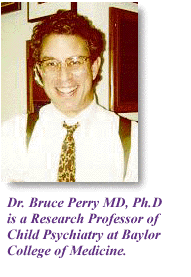
Dr. Bruce Perry and the Developing Mind


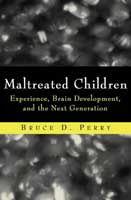
"In the last few years, neuro-biologists have further established that traumatized and neglected children display severe lesions affecting anything up to 30% of those areas of the brain that control our emotions. Severe traumas inflicted on infants lead to an increase in the release of stress hormones that destroy the existing, newly formed neurons and their interconnections. More than anyone else, the credit for recognizing the immense import of these discoveries for our understanding of infant development and the delayed effects of traumas and neglect must go to neurologist and child psychiatrist Dr. Bruce D. Perry. His studies confirm what I described in my book For Your Own Good 20 years ago as a result of observing my patients and studying educational literature."
Alice Miller 1999

Also See:

Dr. Bruce Perry
Studies: Babies' first months crucial to brain development
The ChildTrauma Academy
For Your Own Good

Friday, February 03, 2006

22 Alternatives to Losing It by Jan Hunt


The Natural Child: Parenting from the Heart by Jan Hunt
The Natural Child makes a compelling case for a return to attachment parenting, a child-rearing approach that has come naturally for parents throughout most of human history. A collection of essays from Hunt's newspaper column, the short, inspiring chapters describe the benefits of extended breast-feeding, shared family sleeping, child-parent closeness, and gentle guidance. With its clear focus on mutual respect, The Natural Child offers a caring approach to raising a loving, trusting, and confident child.

Sections include Parenting with Empathy and Trust, Living with a Baby, Living with Children, Guiding Children, Helping Children Learn, and Advocating for Children.

Many parents recognize the harmful effects of physical and verbal punishment. They know that yelling, slapping, hitting, and spanking teach violence, destroy self-esteem, create anger, interfere with learning, and damage the relationship between parent and child.

But knowing what not to do is only the first step; parents wonder what they should do instead. Unfortunately, most current parenting books and articles recommend "alternatives" which in reality are merely alternative punishments. These include time-out, denial of privileges, and so-called "logical" consequences.

All of these methods have much in common with physical punishment, and all give the same messages: that the parent has no interest in the underlying unmet needs that led to the behavior, and is taking unfair advantage of his greater size and power over the child. Most significantly, these approaches tell the child that someone he has come to love and trust wishes to cause him pain. This is a "crazy-making" message, because it is so alien to the child’s intuitive understanding about what love should look like.

Finally, all of these approaches miss the best opportunities for learning. They sidetrack the child into fantasies of revenge, where he is too distracted to focus on the real issue at hand. True alternatives to punishment are those that help the child to learn and grow in a healthy way. There are few greater joys in life than allowing our child to teach us what love is!

Here are twenty alternatives that give positive, loving messages:

1. Prevent unwanted behavior by meeting your child’s needs when they are first expressed. With her current needs met, she is free to move on to the next stage of learning.

2. Provide a safe, child-friendly environment. There is little point in having precious items within the reach of a baby or toddler, when they can simply be put away until the child is old enough to handle them carefully.

3. Apply the Golden Rule. Think about how you would like to be treated if you were to find yourself in the same circumstances as your child. Human nature is human nature, regardless of age.
4. Show empathy for your child’s feelings. Even if a child’s behavior seems illogical, his underlying feelings and needs are real to him. A statement like "You seem really unhappy" is a good way to show that you are on your child's side.

5. Validate your child’s feelings so she knows that you understand and care, and that she will never be rejected for having any particular kinds of feelings. For example, "That scared me too when I was little."

6. Meet the underlying need that led to the behavior. If we punish the outward behavior, the still unmet need will continue to surface in other ways until it is finally met. Questions such as "Are you angry because I've been on the phone so much today? Would you like to go for a walk together?" can help a child feel loved and understood.

7. Whenever possible, find a "win-win" solution that meets everyone’s needs. To learn effective conflict resolution skills, consider a course in Nonviolent CommunicationSM.

8. Reassure your child that he is loved and appreciated. So-called "bad" behavior is often the child’s attempt to express his need for love and attention, in the best way that he can manage at that moment. If he could express this need in a more mature way, he would.

9. Shift the focus away from a situation that has become too stressful to resolve at that moment: "Let's take a break. What would you like to do instead?"

10. Be sure that you and your child have had nutritious food throughout the day so your blood sugar levels stay high. Frequent, small meals are best.

11. Breathe! When stressed, we need more oxygen, but tend to take shallow breaths. Even a few deep breaths can help us to calm down and think more clearly.

12. We don't expect a car to start unless the gas tank is filled, and we shouldn't expect a child to function at her best if her "emotional tank" is running low. Give the three things that fill a child's emotional tank: eye contact, gentle touch, and undivided attention.

13. Chamomile tea is very relaxing for both adults and children. Taken an hour before bedtime by a nursing mother, it can also help to calm her baby. Older children might like iced chamomile tea or popsicles.

14. Take a time out - with your child. A change of scenery - even if it's just a short time outdoors, can make a real difference for both parent and child.

15. Pick a Parenting Card for inspiration and encouragement or create some of your own reminder cards.

16. Offer a massage. A bedtime massage can help a child to sleep more soundly, giving her more resilience and energy for the following day.

17. Give choices. Children need to feel they have a voice. Offering choices, even if they seem unimportant to you ("Do you want the red cup or the blue one?") will help a child feel that he has some say over his life, especially if he has had to cope with recent changes.

18. Try whispering. When tensions are high, whispering can help to get a child's attention and also help to calm the parent.

19. Give your child time. A statement like "Let me know when you're ready to share the toy / climb into the car seat / put on your jacket" will give the child a sense of autonomy and make it easier for him to cooperate.

20. Give yourself time. Count to ten (silently). Sometimes we just need a bit of time to think more clearly and to see things more objectively.

21. Remember that children create images from our words: "Slow down!" is more effective than "Stop running!". The first statement creates an image of slowing down, while the second creates a picture of someone running (the word "don't" is too abstract to overcome the more concrete and compelling image of running). Similarly, a specific request is more effective than a general one: "Please put down the glass" instead of "Be careful".

22. Ask yourself "Will I look back at this later and laugh?" If so, why not laugh now? Create the kind of memory you would like to have when you look back on this day.

In these ways, we can best bring about the genuine cooperation that we seek at the moment. But our greatest reward will be a life-long, mutually loving and trusting bond with our child!

http://www.naturalchild.org/jan_hunt/22_alternatives.html