Friday, April 28, 2006

Stressed-Out Moms Think Their Children are More Difficult


Mothers who experience stress from parenting are more likely to perceive their babies as temperamentally difficult, according to a new study by researchers at Bradley Hospital, Brown Medical School and Women & Infants' Hospital.

Researchers studied a group of mothers —some of whom had used cocaine during pregnancy—and measured their babies' behavior (using cry analysis, and reaction to stimuli) at birth. Subsequently, they asked mothers to rate their babies' temperaments when they were four months old.

They discovered that newborn babies who were more reactive to stimulation were rated as more difficult later in infancy. This finding was seen most strongly in infants whose mothers experienced a lot of stress related to being a parent.

Importantly, these ratings were not affected by whether or not mothers used drugs during pregnancy. Across the board, the mothers who felt the most parenting stress were the ones who rated their babies' behavior as more difficult.

"Whether or not a mother had used drugs, if she felt more stress in her role as a parent, she was more likely to view her baby as difficult and more likely to view her baby's behaviors just after birth as stressful," says lead author Stephen Sheinkopf, PhD, with Bradley Hospital, Brown Medical School and Women & Infants' Hospital. The study appears in the current issue of the Journal of Pediatric Psychology.

These results suggest, that, regardless of drug-exposure status, the manner in which parents react to and cope with challenging infant behaviors can be affected by their stress levels.

"Because we now know that the effect of parenting stress is true both for mothers with and without a history of drug use, these findings support our view that we can help mothers with drug use problems be happier and more effective parents," says Sheinkopf.


This study corroborates previous research showing that high levels of maternal stress are related to poor behavioral outcomes in young children.

"If mothers are highly stressed as parents, this will affect the ways that they think about and interact with their babies. This can have long term effects on how children develop and how families function," says Sheinkopf.


Experts know that prenatal cocaine exposure can lead to developmental risks for infants. What remains unclear is the extent to which social environmental risk factors play a part of developmental delays, including maternal stress and maternal perceptions of difficult infant temperament.

"Therefore, an important goal for research is to identify factors that may either magnify or lessen risk in cocaine-exposed infants," the authors say.

In this study, children in the cocaine-exposed group had lower socioeconomic status (SES). Lower SES was also correlated to greater reactivity to stimuli in newborns, and higher parenting stress and psychological distress in mothers.

Source: Lifespan

This study was funded by the National Institutes on Drug Abuse, the National Institute on Child Health and Human Development, the Administration for Youth and Families, and the Center for Substance Abuse Treatment.

More children feeling suicidal

TOO MUCH PRESSURE?:

The results of a survery revealed yesterday showed that a worryingly large number of Taipei's elementary school students have felt suicidal


A survey has found that more than 26 percent of Taipei city's elementary school students have had suicidal thoughts.

According to the survey, conducted by Chinese Nationalist Party Taipei City Councilor Li Yan-hsiu (???), 26.4 percent of elementary school students had thought about suicide, and about 50 percent said they grew weary of their lives at times.

The survey polled 1,137 students at 12 municipal elementary schools and their parents between February and last month, and found that schoolwork and high parental expectations are the main sources of students' distress.

Although 62 percent of students' parents agreed that schoolwork was the main pressure on their children, 65 percent do not think such pressure is a serious matter.

"Students feel pressure from schoolwork and their parents, but parents failed to acknowledge the seriousness of the issue," Li said yesterday at Taipei City Council.

Lack of communication between parents and their children could lead to a wider generation gap, and cause parents to overlook a child's depression, which could lead to suicide attempts, she added.

Suicide has become the second commonest cause of death among students. According to statistics from the Ministry of Education, the number of student suicides increased 30 percent last year.

Lee Kuang-hui (???), director of the department of psychology at Beitou Armed Forces Hospital, proposed a "38 policy" for parents in order to improve parent-children relationships.

"Parents should spend eight minutes every day to listen to their children; eight minutes to compliment them, and another eight to hug their other half who takes care of the children," he said.

Lee said children suffering from depression may exhibit a loss of interest in schoolwork, suffer from insomnia or lose their appetite.

Parents should not ignore such early signs of depressive problems and should stop pressurizing their children by setting them unrealistic targets.

In addition to advice for parents, Li said that schools should provide counseling services for students who might be struggling to cope.

In Taipei, there are only three professional counsellors assigned to each elementary school, which on average have more than 1,000 students.

Lin Teng-jiao (???), vice commissioner of the Taipei City education department, said the department invited psychologists to work in elementary schools two years ago. If the demand for psychological counseling increases, Lin said, the department would expand the service.

Source: The Taipei Times

Thursday, April 27, 2006

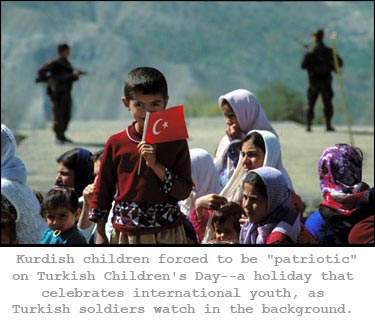
Turkish security kill a Kurdish “terrorist”, aged 3

In Turkey, “Kurdish” is synonymous for “terrorist”, even if the subject matter is a child. Turkey’s constitution is based on racist ideology where the regime’s main pillar of fear is the existence of Kurds.

Turkish security forces shot Fatih Tekin, a three year old Kurdish boy, during a police raid on civilians’ houses in Batman Northern Kurdistan, on 30 March 2006. Fatih was not the only “terrorist” to be shot. The list is long but apart from Fatih, Enez Atak (6), Abdullah Duran (9), Muhlis Ete (16), Mehmet Isik (17), Mehmet Akbulut (18) and Emrah Fidan (19) were all killed. These names attract my attention because of their tender ages. There was also a much older Kurdish “terrorist”, Halit Sogut, 78 year of age.

Kurds, according to Turkish official policy, are all terrorists from 3 to 78 year of age.

The murders of children came from the direct order of their superior, the Turkish Prime Minister. "The security forces will intervene against the pawns of terrorism, no matter if they are children or women. Everybody should realise that,” the Turkish Prime Minister said to his troops, effectively permitting them to kill Kurdish women and children.

This was not the first time that the Turkish security forces have killed children. Ugur Kaymaz, 12, and his father Ahmet Kaymaz were shot by security forces in front of their Kiziltepe home on 21 November 2004. The two were killed in a police operation allegedly against members of a “terrorist” organisation. The governor of the town, in his first statement, said that Ugur and Ahmet Kaymaz were killed in a clash. A 12-year-old boy killed fighting alongside a terrorist organisation. There was an international outcry to label a child as a terrorist: it can only happen to Kurds in Turkey. Feeling the international heat, the Prime Minister stated, “Describing a boy aged 12 as a terrorist is unfortunate. This can’t happen.” Yes it did happen, and in your country.

In the autopsy report, there were a total of 13 bullets in the 12-year-old Ugur Kaymaz's body. Four of them were in his right and left hands, and nine on his back. It was determined that nine of the 13 bullets were fired from a very short distance (less than 50 centimeters). Ugur had gunpowder marks on his body. His father Ahmet Kaymaz had eight bullets in his body. It may not be easy to imagine the hatred inside the security forces that kill a 12-year-old boy with 13 bullets from the distance of a 12 inch ruler.

The persecution of Kurds by Turkish state and Turkish non-state agents has historical roots and hinges on the official ideology, which is not so far away from Nazi Germany. Turkey is a state that is built on lies and racist teaching of Atatuk which enshrines the persecution of Kurds. An example can give the depth and scale of the racist teaching of the society.

On 08 March 2006, during the Kurdish uprising in Northern Kurdistan, two members of the security forces wearing t-shirts declaring "Turkey", took a hostage at a popular Burger King restaurant in Istanbul, with guns and knives. While chanting Turkish nationalist and anti-Kurdish slogans, the soldiers protested because they were serving in Turkish cities and not having an opportunity to go to Kurdistan for hunting Kurds, presumably children. There is a Kurdish proverb: “a handful represents the quality of the rest of the harvest”. This incident put us against a vital question which involves innocent lives: can a security force that is brought with such a racist spirit protect Kurds in Turkey? I am sure there were not the same men who murdered 12-year-old Ugur Kaymaz with 13 bullets, but they no doubt graduated from the same Turkish school of ideology.

The EU should take more responsibility for Turkish crimes against humanity. Few European MPs made much noise. During the ongoing uprising in Turkey, over two dozens of Kurds, including some children, were murdered. If these were doges, the European member states would have taken a better stand.

Furthermore, the European member states are part of the Turkish crimes, as they play music to Turkish ears, which encourages further persecution of Kurds. The Euro MPs still not publicly recognise that the land of Kurds is Kurdistan which is occupied by Turkey. And that is a racist stand. A racist incident as identified by the UK Stephen Lawrence inquiry and by the ensuing Macpherson Inquiry is “racist incident is any incident which is perceived to be racist by the victim or any other person.” As a Kurd, I found Turkey a racist state and responsible for the genocide of my culture and language.

It is nonsense to urge the Turkish state to change its attitude toward Kurds. It is impossible. An outside help is needed for peaceful change in Turkey. Otherwise, Kurdish uprising would change it. We have already seen the start of this. For Turkey to survive and to join the civilised nations, Europe must help.

For the EU to see a peaceful Europe must pursue its values for every nation, ethnic group and communities in the Europe including Kurds. Then the EU member states need to propose a reform package to Turkey which includes the following:

1 – For Turkey to withdraw its security forces form Kurdish homeland, Northern Kurdistan, end the security oppression under the EU mandate;

2 – For EU to facilitate and monitor Northern Kurdistan general election, under international monitors, to establish Kurdistan Parliament and government – similar to the case of devolution of power in other EU member states such as Scotland and Wales.

3 – EU to initiate, facilitate and monitor the devolution of power in Kurdistan and assist in reviving Kurdish economy, language and culture;

4 – EU to facilitate to brining Kurdistan’s Parliament bloc in the EU parliament to establish Kurdistani Bloc

5 – EU to facilitate the Northern Kurdistan Parliament would become the only legislative power of region;

6 – EU to facilitate the Kurdish language becomes the official language in Kurdistan in every aspects of life.

Without these fundamental measures, there will not be peace either in Turkey or in the EU countries.

Scource: Kurdish Media


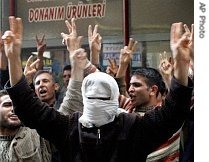
Above Kurdish demonstrators

Rights Groups: Abuses on the Rise in Turkey's Kurdish Regions

The violence resumed when the PKK, citing the government's refusal to negotiate a lasting peace, ended a five-year truce in June 2004. Scores of rebels and Turkish soldiers have died in the fighting.

Yalcindag cites violent demonstrations that erupted in the region's largest city, Diyarbakir, and neighboring Batman last month during the funerals of four PKK fighters. Though the government has never issued a statement on how many people died in the violence, human rights monitors say at least 13 civilians, four of them children, died in clashes with police.

"You have to respect the right to life of the demonstrators, I mean," she added. "The result must not be 10 people killed in Diyarbakir, or one child killed in Batman. Two persons were killed in Kiziltepe [Mardin province]. Hundreds of people were wounded or transferred to prisons and tortured. We do have medical reports."

The London-based rights group, Amnesty International, has joined calls for the Turkish government to investigate allegations of abuse during the protest rallies. In a statement, the organization said, "in light of the reported decline in the use of torture in recent years" Amnesty International was "particularly disturbed at allegations of torture, or ill treatment of detainees, including beatings, death threats and being stripped naked and sprayed with cold water."

Abdullah Gul is Turkey's foreign minister and a leading proponent of Turkey's membership in the EU. In a recent interview, Gul told VOA that there was no question of his government slowing the pace of reforms. Gul says the PKK is seeking to provoke his government into conflict, in order to derail the reform process, because, he says, the reforms have weakened the PKK's appeal among the Kurds.

"We believe democracy will isolate the terrorists," he said. "So, that is the best way to fight terrorists. Of course, we will take more efficient and effective measures to fight terrorism, but, we will keep this line very consciously."

Proposed measures to deal more effectively with the PKK, which is on the U.S. State Department's list of terrorist organizations, include stiffening Turkey's controversial anti-terror law.

Under the proposed amendments, carrying pro-PKK banners would be deemed a crime punishable by up to 15 years in prison. Spreading PKK propaganda would carry a maximum penalty of five years.

Huseyin Kalkan is the mayor of Batman, and belongs to Turkey's largest pro-Kurdish party, the Democratic Society Party, which controls the majority of municipalities in the Kurdish region.

Kalkan says there is growing concern that Turkey is slipping back into what he calls "the scary days."

Kalkan says he and scores of his fellow party members are already facing a slew of court cases under existing laws. Prosecutors are seeking a 10-year sentence for Kalkan on charges of aiding a terrorist organization. He says his alleged offense was calling on PKK demonstrators in Batman to disperse peacefully after exercising their democratic right to protest.

Kalkan cautions that such legal crackdowns may help the PKK find new recruits.

Kalkan concludes that, in the absence of a full democracy, some young Kurds may once again turn to the mountains, where the rebels are based, in the hope of finding a solution to their problems.

Wednesday, April 26, 2006

Video of Israeli Soldier Shooting Palestinian Boy

Shooting of Ahmad Mohammed Karan by a Israeli Soldier


Footage of this boy being intentionally
shot by an Israeli soldier was erased by
the Associated Press. Photo: Reuters

AP Erases Video of Israeli Soldier Shooting Palestinian Boy
Stonewalls Queries during “Sunshine Week: Your Right to Know”
Alison Weir
Also in
March 17, 2006

“The trend toward secrecy is the greatest threat to democracy.”

- Associated Press CEO, in a speech about the importance of openness

“The official response is we decline to respond.”

- Associated Press Director of Media Relations, replying to questions about AP

The omitted story was “not newsworthy.”
In the midst of journalism’s “Sunshine Week” – during which the Associated Press and other news organizations are valiantly proclaiming the public’s “right to know” – AP insists on conducting its own activities in the dark, and refuses to answer even the simplest questions about its system of international news reporting.

Most of all, it refuses to explain why it erased footage of an Israeli soldier intentionally shooting a Palestinian boy.

AP, according to its website, is the world’s oldest and largest news organization. It is the behemoth of news reporting, providing what its editors determine is the news to a billion people each day. Through its feeds to thousands of newspapers, radio and television stations, AP is a major determinant in what Americans read, hear and see – and what they don’t.

What they don’t is profoundly important. I investigated one such omission when I was in the Palestinian Territories last year working on a documentary with my colleague (and daughter), who was filming our interviews.

On Oct. 17, 2004 Israeli military forces invaded Balata, a dense, poverty-stricken community deep in Palestine’s West Bank (Israel frequently invades this area and others). According to witnesses, the vehicles stayed for about twenty minutes, the military asserting its power over the Palestinian population. The witnesses state that there was no Palestinian resistance – no “clash,” no “crossfire.” At one point, after most of the vehicles had finally driven away, an Israeli soldier stuck his gun out of his armored vehicle, aimed at a pre-pubescent boy nearby, and pulled the trigger.

We went to the hospital and interviewed the boy, Ahmad, his doctors, family, and others. Ahmad had bandages around his lower abdomen, where surgeons had operated on his bladder. He said he was afraid of Israeli soldiers, and pulled up his pants leg to show where he had been shot previously.

In the hospital there was a second boy, this one with a shattered femur; and a third boy, this one in critical condition with a bullet hole in his lung. A fourth boy, not a patient, was visiting a friend. He showed us a scarred lip and missing teeth from when Israeli soldiers had shot him in the mouth.

This was not an unusual situation. When I had visited Palestinian hospitals on a previous trip, I had seen many such victims; some with worse injuries. Yet, very few Americans know this is going on. AP’s actions in regard to Ahmad’s shooting may explain why.

We discovered that an AP cameraman had filmed the entire incident. This cameraman had then followed what apparently is the usual routine. He sent his video – an extremely valuable commodity, since it contained documentary evidence of a war crime – to the AP control bureau for the region. This bureau is in Israel.
What happened next is unfathomable. Did AP broadcast it? No. Did AP place the video in safe-keeping, available for an investigation of this crime? No.

According to its cameraman, AP erased it.

We were astounded. We traveled to AP’s control bureau in Israel. With our own video camera out and running, we asked bureau chief Steve Gutkin about this incident. Was the information we had been told correct, or did he have a different version? Did the bureau have the video, or had they indeed erased it. If so, why?

Gutkin, repeatedly looking at the camera and visibly flustered, told us that AP did not allow its journalists to give interviews. He told us that all questions must go to Corporate Communications, located in New York. He explained that they were on deadline and couldn’t talk. I said I understood deadline pressure, and sat down to wait until they were done. When he called Israeli police to arrest us, we left.

Back in the US later, I phoned Corporate Communications and reached Director of Media Relations Jack Stokes, AP’s public relations spokesman. I had conversed with Stokes before.

Over the past several years I have noticed disturbing flaws in AP coverage of Israel-Palestine: newsworthy stories not being covered, reports sent to international newspapers but not to American ones, stories omitting or misreporting significant facts, critical sentences being removed from updated reports.

I would phone AP with the appropriate correction or news alert. One time this resulted in a flawed news story being slightly corrected in updates. In a few cases stories were then covered that had been neglected. In many cases, however, I was told that I needed to speak to Corporate Communications. I would phone Corporate Communications, leave a message, and wait for a response. Most often, none came.

Several times, however, I was able to have long conversations with AP spokesman Stokes. None of these conversations, however, ever ended with AP taking any action. Some typical responses:

  • The omitted story was “not newsworthy.”
  • The story deemed by AP editors to be newsworthy to the rest of the world – e.g. Israel’s brutal imprisonment of over 300 Palestinian youths – was not newsworthy in the US (Israel’s major ally).
  • Burying a report of Israeli forces shooting a four-year-old Palestinian girl in the mouth was justified.
  • Misreporting an incident in which an Israeli officer riddled a 13-year-old girl at close range with bullets was unimportant.

Despite this unresponsive pattern, when I learned firsthand of an AP bureau erasing footage of an atrocity, I again phoned Corporate Communications. I no longer had much expectation that AP would take any corrective action, but I did expect to receive some information. I gave spokesperson Stokes the numerous details about this incident that we had gathered on the scene and asked him the same questions I had asked Gutkin. He said he would look into this and get back to me.

After several days he had not gotten back to me, so I again phoned him. He said that he had looked into this incident, and that AP had determined that this was “an internal matter” and that they would give no response.

While I should have known better, I was again astounded. AP was blatantly violating fundamental journalistic norms of ethical behavior, and clearly felt it had the power to get away with it.

Journalism, according to the Statement of Principles of the American Society of Newspaper Editors, is a “sacred trust.” It is the bulwark of a free society and is so essential to the functioning of a democracy that our forefathers affirmed its primacy in the very first amendment of the Bill of Rights.

According to the Society of Professional Journalists, one of the four major pillars of journalistic ethics is to “Be Accountable.” According to the SPJ’s Code of Ethics:

“Journalists are accountable to their readers, listeners, viewers and each other.

Journalists should:

  • Clarify and explain news coverage and invite dialogue with the public over journalistic conduct.
  • Encourage the public to voice grievances against the news media.
  • Admit mistakes and correct them promptly.
  • Expose unethical practices of journalists and the news media.
  • Abide by the same high standards to which they hold others.”

Finally, this week, on deadline with a chapter about media coverage of Israel-Palestine, I again tried to confirm some of my facts with AP. Certainly, I felt, during “Sunshine Week” AP would respond. As part of the Sunshine campaign, AP’s CEO and President Tom Curley is traveling the country giving speeches on the necessity of transparency and accountability (for government) and emphasizing “the openness that effective democracy requires.”

“The trend toward secrecy,” AP's President has correctly been pointing out, “is the greatest threat to democracy.”

I emailed my questions to AP, talked to Stokes by phone, and again was told he would get back to me. Again, I got back to him. Then, in a surreal exchange, he conveyed AP’s reply: “The official response is we decline to respond.” As I asked question after question, many as simple as a confirmation of the number of bureaus AP has in Israel-Palestine, the response was silence or a repetition of: “The official response is we decline to respond.”

The next day I tried phoning AP’s President Curley directly. I was unable to reach him, since he was on the road giving his Sunshine Week speeches (“Secrecy,” Curley says, “is for losers”), but I left a message for him with an assistant. She said someone would respond.

I am still waiting.

It is clearly time to go to AP’s superiors. The fact is, AP is a cooperative. It is not owned by Corporate Communications spokespeople or by its CEO or even by its board of directors. It is owned by the thousands of newspapers and broadcast stations around the United States that use AP reports. These newspapers, radio and television stations are the true directors of AP, and bear the responsibility for its coverage.

In the end, it appears, the only way that Americans will receive full, unbiased reporting from AP on Israel-Palestine will be when these member-owners demand such coverage from their employees in the Middle East and in New York. As long as AP’s owners remain too busy or too negligent to ensure the quality and accuracy of their Israel-Palestine coverage, the handful of people within AP who are distorting its news reporting on this tragic, life-and-death, globally destabilizing issue will quite likely continue to do so.

In the final analysis, therefore, it is up to us – members of the public – to step in. Everyone who believes that Americans have the right and the need to receive full, undistorted information on all issues, including Israel-Palestine, must take action. We must require our news media to fulfill their profoundly important obligation, and we must ourselves distribute the critical information our media are leaving out.

If we don’t take action, no one else will.

Source: If Americans Knew

Children's Rights Video

Video By Children's Rights

Children's Rights, one of the USA's foremost advocacy organizations for children. We use the power of the courts, policy analysis and public education to ensure that children who are abused and neglected receive the care and services they need and that they grow up in permanent and loving homes.

Well Done Children's Rights from Natural Childhood

Tuesday, April 25, 2006

Eighty children face jail after Turkish riots


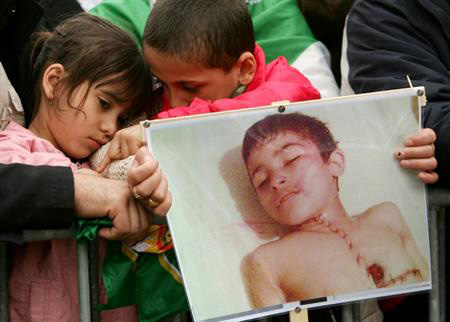
Pictured Above
Kurdish children stand next to a picture, on April 15, 2006, they said showed victims of street clashes with Turkish police that occurred two weeks ago in southeast Turkey. Eighty children who took part in riots in Turkey's troubled, mainly Kurdish southeast face up to 15 years in prison, according to an indictment seen by Reuters on Tuesday.

DIYARBAKIR, Turkey (Reuters) - Eighty children who took part in riots in Turkey's troubled, mainly Kurdish southeast face up to 15 years in prison, according to an indictment seen by Reuters on Tuesday.

The riots, which began late last month, pitting pro-Kurdish protesters against the security forces, were the worst civil unrest in Turkey for more than a decade and left 16 people -- including at least three children, one aged 3, -- dead and hundreds injured.

The indictment, prepared by prosecutors in Diyarbakir, the city worst affected by the violence, includes charges of belonging to a criminal organisation, damaging state buildings and attacking police vehicles with Molotov cocktails.

If convicted, the children, aged between 12 and 18, face between 10 and 15 years in jail. They are expected to go before a judge in the coming days.

The Diyarbakir Juvenile Serious Crimes Court has dismissed similar charges against 36 other children involved in the riots. A court in the capital Ankara will now decide whether to press ahead with that case or to let it drop.

Dozens of adults also face jail sentences for their involvement in the protests, which lasted for days and included the torching of public buildings and the ransacking of shops.

Turkish officials have blamed the outlawed Kurdistan Workers Party (PKK) for the riots and say the group deliberately used women and children to hamper the security forces' response.

Prime Minister Tayyip Erdogan said on March 31, when the riots were in full swing, that children were being used as "pawns of terrorism" and said the security forces could not guarantee their safety.

A draft anti-terrorism bill under discussion envisages tougher penalties for parents who allow their children to take part in illegal protests.

Turkey blames the PKK for the deaths of more than 30,000 people since the group began its armed campaign for a Kurdish homeland in southeast Turkey in 1984.

Turkey's southeast suffers high unemployment and many Kurds want political autonomy and more cultural freedoms. They feel the Turkish state is hostile to them and many express sympathy for the PKK.

The European Union, which Turkey aims to join, expressed concern over the clashes and urged Ankara to improve Kurdish rights. Like Turkey, the EU views the PKK as a terrorist group.

Source: Reuters

Sunday, April 23, 2006

New Tool Taps Drool For Clues To Childhood Stress


In four separate studies of mothers and their infants, preschoolers, kids and teens, a multi-university research team has shown, for the first time, that a simple test of a little drool can provide new insight into the role of social stressors, including relationships with parents and teachers, in child development.

The test monitors alpha amylase, an enzyme secreted by the salivary glands, that has been linked in adults to the sympathetic nervous system's (SNS) fight or flight response. Now, in these new studies, alpha amylase has been shown to be a marker for the SNS response in children, too.

The current findings suggest that social forces largely determine individual differences in alpha amylase levels. The social stressors used in the studies included babies being gently restrained by a stranger and the older children having to complete a frustrating task, interact with a teacher, or be evaluated. Social relationships with mothers and teachers were also found to influence alpha amylase levels.

Dr. Douglas A. Granger, associate professor of biobehavioral health and human development and family studies at Penn State, is first author of the teams' recently published paper on the study. He says, "Being able to monitor alpha amylase via a salivary test may open new opportunities to characterize individual differences in response to stress that we weren't able to see before. We think that these differences could prove to be meaningful in understanding behavior."

The four studies are detailed in an invited paper, "Integrating the Measurement of Salivary Alpha-Amylase into Studies of Child Health, Development and Social Relationships," in a special issue of the Journal of Social and Personal Relationships published in April. The authors are Granger, Katie T. Kivlighan, doctoral candidate in biobehavioral health, and Dr. Clancy Blair, associate professor of human development and family studies, all at Penn State; Mona El-Sheikh, Jacquelyn Mize, Jared A. Lisonbee and Joseph A. Buckhalt in the Department of Human Development and Family Studies at Auburn University; Dr. Laura R. Stroud, Centers for Behavioral and Preventive Medicine, Brown Medical School; Dr. Kathryn Handwerger, Department of Psychology, Tufts University and Eve B. Schwartz, Salimetrics LLC, State College, Pa.


The findings reported include the observation that mothers and their 6-month-old baby sons were "attuned" and had similar alpha amylase levels.

Among the 8- and 9-year olds studied, there was a pattern of positive associations between alpha amylase and social problems, aggressive behavior, and cognitive/academic problems.

In addition, the researchers report that 4-year-old children with higher alpha amylase were more susceptible to illness and had less close relationships with their preschool teachers. The associations between alpha amylase and illness were somewhat stronger for girls than for boys.

The authors write, "The associations revealed between alpha amylase and illness susceptibility are particularly robust and worthy of comment. The finding is unique and is consistent with volumes of research on the linkages between the brain, behavior and immunity."


Source: http://www.medicalnewstoday.com/medicalnews.php?newsid=41968

Natural Childhood Comment: "The findings reported include the observation that mothers and their 6-month-old baby sons were "attuned" and had similar alpha amylase levels. "

Mothers "attune" their babies to the same stress levels by the age of 6 months that they themselves feel. In psychology this is called projection and babies suffer as a consequence. Later on they grow up to be stressed adults.

Alice Miller has called this projection the urge to repetition i.e to restage childhood traumas on one's own children. What is clear from this and other studies is that mothers (and fathers) with repressed trauma always project that trauma onto their children - unless of course parents are helped to be better parents. Then we can stop the "inheritance" of trauma through the generations.

Wednesday, April 19, 2006

U of T student awarded 'children's Nobel' Craig Kielburger cited for leadership of Free the Children

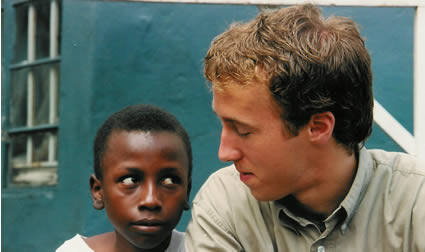
Pictured BelowCraig Kielburger 2006 Children’s Award Winner for
the Rights of the Child, chatting with a young African boy

U of T student and international activist Craig Kielburger has won the 2006 Children’s Prize for the Rights of the Child, often referred to as the children’s Nobel, according to an announcement made today by Free the Children, an organization Kielburger founded when he was 12.

The award recognizes outstanding contributions to the defence of rights for children. Kielburger was cited for his crusade against child poverty and exploitation through Free the Children. Kielburger organized the NGO in 1995 with a group of school friends and it has grown into an international network of more than one million children in 45 countries. Unique in that the group is child-driven, it has built more than 425 schools that educate 35,000 children a day, deployed medical equipment worth $9 million US around the world and given sewing machines and livestock to more than 20,000 women.

“It is my great privilege to accept this award on behalf of all the young people of Free the Children who are committed to creating a better world for their peers,” Kielburger said in a press release.

The award was conferred by an international jury of children including former child soldiers, slaves and refugees and brings with it a $40,000 US prize. It will be presented by Queen Silvia of Sweden in a ceremony Apr. 20. Past recipients include Nelson Mandela and Anne Frank.

Kielburger will graduate this June from Trinity College with a specialist degree in peace and conflict studies. He was also recently awarded the university’s prestigious Moss Scholarship.

by Jenny Hall

Source: University of Toronto

Also See: Free The Children

Monday, April 17, 2006

What the British Can Do To End Child Abuse


By Lloyd deMause

Speech to be given in London on Mar. 27, 2006 for the Winnicott Memorial Lecture at Kings College

That Donald Winnicott treated many abused children is evident from his opening statement of his essay on treating children saying when they come to him he often finds them "clinging to mother in dread of the white-coated doctor who will surely be a monster who eats children." [1] He even sometimes admitted that children's fears were results of what he termed "the mother's unconscious (repressed) hate of the child." [2] Still, since he mainly only saw parents and children in his office and in clinics, where mothers tended not to openly abuse their children, and since he relied for his child abuse figures on grossly understated British official statistics that claimed only a tiny percentage of children were abused, he regularly stated in his writings that "most babies get good-enough care," and "the majority of babies have their basic needs met." [3] In fact, Winnicott is most often remembered for coining the "good-enough mother" concept.

This "good-enough mother" notion was foremost in my mind when, five decades ago, I began intensive historical research for my book The History of Childhood. Working with dozens of other psychohistorians, I was astonished to conclude that, as the opening words of my book put it,

The history of childhood is a nightmare from which we have only recently begun to awaken. The further back in history one goes, the lower the level of child care, and the more likely children are to be killed, abandoned, beaten, terrorized and sexually abused.[4]

I have been so impressed with the overwhelming evidence in the primary source documents I have spent my life studying for the ubiquity of severe historical child abuse and neglect that I have offered a prize for anyone who could find a mother prior to the 18th century anywhere in the world who could be called a "good-enough mother" — the definition of which being a mother who would not today be thrown in jail for child abuse. No one has yet claimed the prize.

In the three decades since my first book on the history of childhood appeared, over a hundred books and articles by myself and my fellow psychohistorians have been published — most of them in my Journal of Psychohistory — giving overwhelming evidence of the truth of this astonishing view of how common child abuse has been throughout history. According to Judith Issroff's new book on Winnicott and Bowlby, it was only after my work appeared that British psychoanalysts were able to "recognize how prevalent the incidence of actual abuse, neglect and torture" has been and still is in the U.K.[5] I hope today to present to you reliable evidence that abusive childrearing remains the norm for most of children in the world, even for the majority of British children today. I will then describe some new programs that have been shown to be have dramatically reduced child abuse and neglect, along with all of its violent and costly consequences for society.

THE PREVALENCE OF BRITISH CHILD ABUSE

Historical studies of widespread British sexual abuse in the modern period are familiar enough to historians, but what is most surprising is how recently — not until the 1960s — child prostitutes in England were considered anything but "wild," "depraved," "sinful" and "tarts," blaming the victims for the crimes against them. It is one thing to hear British men in 1900 give excuses in the Old Bailey that they simply had to have intercourse with little children because "that was the only way they could be cured of venereal disease," since it was commonly believed that children absorbed the disease.[6] It is another thing to read a book published in 2002 entitled Knowledge of Evil: Child Prostitution and Child Sexual Abuse in Twentieth-Century England [7] report on all the current defenses of the sexual uses of children and tentatively conclude: "It is the contention of this publication that child prostitution is a form of child abuse."

It has admittedly been quite a while since Beatrice Webb and other British writers reported that they had found the sexual abuse of young girls by their fathers and brothers was so common in British families that the girls often joked about their babies as being products of incest,"[8] yet the practice remains common enough because of official government opposition to providing social workers to investigate families. As one Member of Parliament put it recently, "we need more policemen and fewer social workers [so] we can get back to the Victorian days of discipline." [9] Similarly, the rape of boys in British public schools, "with the full knowledge and collusion, even the approval, of their elders…where older boys and even teachers had younger boys as their 'bitches' to use sexually"[10] has — along with the infamous "English vice" of "erotic flagellation" of children in school — been recently outlawed, but it continues behind the scenes nonetheless.[11] The most accurate recent study of child sexual abuse in the U.K. asked college students if they had been abused as children, and 59% of women and 27% of men reported having been sexually abused as children.[12] This is even higher than the most accurate studies of Americans, which found that 45 percent of girls and 30 percent of boys admitted to having been sexually abused.[13] That all these figures are underdisclosures is admitted, since (a) some of those interviewed would have lied about being abused, since it is considered shameful, (b) some would have repressed their early sexual abuse, (c) the universe interviewed was a higher social class, since people in jails, poor areas and immigrants were not interviewed, and they regularly have much higher rates of victimization, and (d) the one-third who refused to be interviewed undoubtedly had higher victimization rates.[14] These four factors should bring the accurate U.K. figures for childhood sexual assault today to at least two-thirds of girls and one-third of boys — certainly an eye-opening conclusion when compared with a recent survey of British doctors who believed the child sexual abuse rate was probably less than one percent![15]

The rate of British physical abuse of children is even higher than the rate of sexual abuse. The Newson studies in both 1958 and 1985 found from interviewing the mothers that two-thirds of them said they were routinely hitting helpless infants in the first year of their lives, about the same proportion as in the U.S.[16] They were surprised that there was no improvement in the 27 years between their two studies. Again, they point out this figure is understated, saying "Obviously we are not so naïve as to think that mothers will never tell us lies of attempt to whitewash their actions."[17] In addition, their studies do not cover many immigrant groups, which usually have higher rates of physical abuse. By the time the children are four years old, they found that "hardly anyone was never smacking their four-year-old and only a quarter overall were smacking less than once a week."[18] By the time the children reached four "only 3% had not been smacked, on the average of at least once a week…most a good deal more often."[19] Boys were hit twice as often as girls, and mothers hit far more often than fathers, since they were the primary caretakers.[20] Hitting or threatening with implements — straps, belts, canes, sticks — was used on 91% of boys and 59% of girls. The rates of physical child abuse in the U.K. were about the same as those of the U.S.,[21] but far higher than the rates of most other West European nations.[22] In the past 25 years, 16 European nations have outlawed the corporal punishment of children, and the Parliamentary Assembly of the Council of Europe has recently called upon all the other European nations to make Europe "a corporal punishment-free zone for children." Hungary, the Netherlands, the Slovak Republic and Slovenia are about to join the abolitionist states, and others are considering doing so.

The results of outlawing the hitting of children are dramatic. In Sweden, the first country to abolish corporal punishment of children by everyone, not only has public support for hitting children— even in its mildest forms — been reduced from 53% to only 11%, but in addition only 6% of younger Swedes today say they support corporal punishment.[23] Practice in Sweden, as well as attitude, has changed as well, with only 3% of school children saying they had been slapped by their parents, and only one child in 25 years having been killed by their parent. The results of this dramatic decrease in hitting have been spectacular. The number of children needing social work care has decreased by 26%, the number of youth convicted of theft declined by 21%, the rates of alcohol and drug abuse by youths have declined dramatically, and the rate of youth suicide has also declined. What is most astonishing is that in Sweden and in other countries outlawing the hitting of children the populations actually began by being in favor of corporal punishment, but after their legislatures passed their anti-hitting law despite this pro-hitting mood the general public gradually became more and more opposed to corporal punishment, without any dramatic intrusion by the state into family life. There was simply a shift in what was considered a "good" parent from one who used what was termed "appropriate corporal punishment" (witness the current British debate as to what is "reasonable chatisement" of little children) to one in which professionals could feel comfortable in recommending alternative methods without feeling that they were trespassing on private family matters. Advisors to parents from British social agencies and children's centers can leave behind their usual time-consuming legal battles and instead provide parents with what the Swedes call "a contact person…whose role it is to provide friendship and support to the family on a voluntary, preventive basis."[24]

I saw the dramatic results of what a program of outlawing hitting and of providing real support for parents can actually do when I recently toured Austria giving a speech on "The Childhood Origins of the Holocaust."[25] I began by giving the massive evidence accumulated by myself and my fellow psychohistorians on child abuse in Germany and Austria during the first half of the 20th century. Parents killed their newborn over a third of the time, so that siblings watched their mothers strangle babies and throw them in latrines. Breastfeeding was infrequent, so infant mortality rates ranged up to 58%. During their first year of life, infants were bound up tight with swaddling bandages and rarely changed, left in their own feces and urine, covered with lice and other vermin and hung on a peg on the wall. Parents routinely called their little children "lice" and "useless eaters" because they didn't contribute to the family income. Battering was routine from birth, "to stop them from being a 'tyrant,' so that one is master of the child forever." Parents were often described as being in a "righteous rage" while they "hammered obedience" into their children. When the children were five or so they were sent out to be servants, where beating and sexual abuse was the rule. That these children became "time bombs" ready to explode as adults was not surprising.

During the Weimar period, a phobic group-fantasy became so widespread that the population was convinced that their blood was about to be infected by lice, which had to be exterminated in order to save the nation's bloodstream from being poisoned — re-experiencing the fear of poisonous lice they had as helpless, swaddled infants. First tens of thousands of homeless children were exterminated as "useless eaters" in the first gas chambers and crematorium ovens, in the 1920s, before the Holocaust began. Then Jews began to be called "the lice of civilized mankind" (Goebbels) and "parasites on the body of other peoples who had to be exterminated" (Hitler). Projecting their own feelings as babies in their shit-bandages onto Jews, Austrians and Germans rounded them up and put them into death camps, telling them: "You'll be eaten by lice, you'll rot in your own shit. You are all going to die." Every name their parents called them as children they repeated with the Jews, who were termed in official documents "useless eaters" and "filthy lice who were infecting our pure blood." As they locked Jews into the death camps, they called them" you filthy shitface," and threw them into latrine pits, forcing feces into their mouths. As Himmler put it, the Holocaust "is exactly like delousing. The removal of lice is not an ideological question, but a matter of hygiene."

After WWII ended, even though economic recovery made family life difficult in Central Europe, by 1960 German and Austrian mothers began to be given help by the state in their childrearing tasks, and the traditional authoritarian model of the family that had been going on for centuries changed rapidly. In 1964, for instance, 80 percent of German and Austrian parents admitted to beating their children, but for the past decade there has been a law against hitting children which has improved childrearing so much that careful personality studies today show both Germans and Austrians are now less abusive toward children and less authoritarian in personality than British and Americans. Mothers are today given paid leave for up to three years when they have their children, and now feel able to show love and support for the independence of their growing children that would have shocked their grandparents. This and other state-supported help to parents has led to a less violent, more humane society, one that is rarely anti-Semitic and even to a great extent is beyond the kind of violent nationalism that led to WWII. After all, studies of the effect of abusive childrearing since Adorno's Authoritarian Personality studies have shown how harsh childrearing leads to fearful, violent adults who repeat their early abuse in politics and wars. The recent studies of Milburn at the University of Massachusetts show individuals who reported high levels of childhood punishment held far more punitive political attitudes, including a more consistent use of military force to settle disputes.[26] It is not surprising, therefore, that the Austrians I met regularly on my speaking tour considered themselves not as nationalist Austria-first political actors but as Europeans — even just as humans — and were far more peaceful politically than most people in my own country.

ADDITIONAL PROGRAMS THAT CAN HELP ELIMINATE CHILD ABUSE

There are three additional programs beyond anti-hitting laws and financial and assistance that have been shown to drastically reduce child abuse in their areas. All have been regularly reported upon in my Journal of Psychohistory (a recent issue of which I have set out free for those of you who wish to learn more about the subject of ending child abuse.) The first is what have been called Community Parenting Centers, like the one started 23 years ago in Boulder, Colorado. Their mission is "to relieve isolation, reduce the stress of parenting and prevent child abuse and neglect by providing outreach and a place where families can receive support, education and develop a sense of community"[27] Unlike the British Sure Start centers — which are more day care oriented and aim mainly at helping poor parents find child care while they work — Community Parenting Centers (a) give lectures by more experienced parents for new parents, (b) have play groups for children with puppet shows that demonstrate parent-child interactions, (c) give post-partum depression assistance, (d) provide help for immigrants and unmarried mothers, (e) give talks on how to set limits for toddlers, and (f) even have free home visits to new mothers by volunteers who give pediatric and psychological help. The centers are free to all and quite inexpensive to run, especially since it has been shown that for every dollar invested in better parenting by the Center the state saves over a hundred dollars in later costs of social services, hospital costs and jails. The reduction of child abuse in Boulder and in other centers, such as the Parent Child Center Network in Vermont and the Hawaii Healthy Start Program, has been substantial.[28]

A second child support program is the Home Visiting Programs run in Boulder and several other cities that visit weekly in their homes mothers who have shown by their fears of handling their newborn that they are potentially abusive and need more help in parenting. Home Visiting is preventive, not intrusive; it is not at all the same as social workers visiting homes to see if they need to remove the children to protect them. It involves paraprofessionals who can visit hundreds of families and who can give person-to-person help in working through emotional problems. In Colorado, the cost of operating both the Community Parenting Centers and Home Visiting Program is estimated can be covered by a 0.1% "Children's Sales Tax,"[29] surely a tiny amount when one recognizes that the costs to society of a career criminal or drug user is about $2 million for each youth who has been abused as a child.[30]

A third effective program in parenting was recently started in New York City by Margaret R. Kind, M.D., a psychiatrist, who taught a course on parenting in the city school system to 30 high school classes. It is, of course, revealing of our priorities that although parenting is one of the most important jobs in every nation in the world, there has until now never been as far as I am aware any actual courses teaching it in any school. Students taking Kind's course learn about children's needs for love, attachment, commitment, admiration, toleration and empathy, and learn how to have discipline without distress-causing punishment, discomfort or physical pain. Students are surprised to learn how important early relationships are to the infant, and go through the parenting stages with an excellent textbook, The Six Stages of Parenthood. They are frequently surprised by how much time caring for an infant takes, and begin during their teens to plan their own lives so they can be available to the child as they grow up. What is most promising is how enthusiastic the students are about taking the course. I myself read a large stack of their final comments about the course, and they not only praised how much they learned both what to do and what not to do, even if it was different than what their parents did, but they wrote things like, "Now I can be a successful parent! I was not sure before that I could" and "I think more people should have the opportunity to take a course like this, and avoid a lot of mistakes…mistakes that are a matter of life and death." As Kind puts it, "The students loved the course, and they, themselves, suggested that it be mandated to be taught to all high school students! Their enthusiasm was remarkable, well expressed, and gratifying."[31]

SURE START ISN'T ENOUGH

But isn't the British "Sure Start" program enough to protect children? With three billion pounds directed to help 400,000 children in over 500 local Sure Start programs, isn't this enough to reduce child abuse and neglect? Unfortunately, the statistics show no effect so far on child abuse rates, or even on child poverty or learning, according to the official Birkbeck College study, which recently found "no discernible developmental, language or behavioural differences" in Sure Start areas after 18 months of programs.[32] Of course, it is much too early to see measurable results from such a recent effort, but since Sure Start's main goals were stated as "enabling parents to work…reducing crime rates and reducing child poverty"[33] — not "reducing child abuse" — it cannot be expected to be effective in ending parental abuse of their children. Indeed, Parliament just voted to keep "clause 56" of the Children's Bill which allowed "reasonable punishment" in hitting children, which is interpreted to send out the dangerous message to parents: "carry on smacking, but don't leave a physical mark." [34] Still, the transformation of Sure Start programs into Children's Centres that is now under way in some of the most deprived neighborhoods is a positive step toward eventually turning them into real Parenting Centers and Home Visiting Programs, as I suggested earlier. This could turn the Sure Start program into a real effort to end child abuse and neglect rather than being embroiled in British child daycare agendas designed to support maternal employment. Even the Sure Start Maternity Grants, though tiny (only five hundred pounds), are a beginning, and can be expanded to at least a year's support for new mothers. Plus, the current Children's Centers, though badly underfunded, have begun to reach out to families with some home visiting and parenting classes in deprived areas. In twenty of the Sure Start Children's Centres the National Society for the Prevention of Cruelty to Children is involved in a "FULL STOP Campaign" to give helpful advice to new parents to "protect babies by encouraging parents to think about and prepare for the stresses of parenting before their baby is born."[35] Beginnings are being made, and could be turned into results in ending child abuse. Even the preschool programs could be expanded into real efforts at ending child abuse, as they have been in many of the publicly-supported preschool programs beginning to proliferate in the U.S.[36] The costs of these new programs are, as I have said, low compared to the many billions of pounds of direct costs from child abuse now estimated by the British National Commission on the Prevention of Child Abuse,[37] plus the indirect costs of social workers, adoption expenses, police and jails to handle the other results of child abuse. The end of child abuse could eventually mean the end of much of the criminal system. As James Gilligan, a prison psychiatrist who has spent his life interviewing criminals, puts his findings:

"In the course of my work with the most violent men in maximum-security settings, not a day goes by that I do not hear reports of how these men were victimized during childhood. Physical violence, neglect, abandonment, rejection, sexual exploitation, and violation occurred on a scale so extreme, so bizarre, and so frequent that one cannot fail to see that the men who occupy the extreme end of the continuum of violent behavior in adulthood occupied an extreme end of the continuum of violent child abuse earlier in life. As children, these men were shot, axed, scalded, beaten, strangled, tortured, drugged, starved, suffocated, set on fire, thrown out of windows, raped, or prostituted by mothers who were their pimps.[38]

Obviously the costs of improving child care are small compared to the enormous costs of the crimes produced by creating time bombs rather than useful citizens. Even the costs of the mental health system are a result of child abuse. As Brett Kahr found when he began to work in the back wards of a British psychiatric hospital with people diagnosed as "schizophrenics,"

"I soon discovered that many of my patients had experienced profound death threats and attempts on their lives in childhood…One of my patients first entered a psychiatric hospital at the age of eighteen because his mother kept chasing him around the family home wielding a carving knife and shouting, 'I will kill him. I will kill him.'"[39]

Brett's insights have recently been confirmed major studies showing that the overwhelming majority of schizophrenics and other serious psychiatric patients were horribly abused as children and that their hallucinations were simply flashbacks to dissociated early abusive events.[40] Saving the costs of child abuse involved in maintaining psychiatric hospitals and the additional costs of other emotional disorders such as depression adds to the results to be expected as the programs I have suggested become implemented.

The problem in ending child abuse, therefore, isn't funds. It is attitude. As one British child care expert put it:

"Britain has no explicit 'family policy.' There is a contradiction between the belief that the State should not encroach upon the autonomy of the family and its perceived duty to ensure that family care of dependents and socialization of the young is adequately conducted. By acting indirectly, abstaining from proclamation of general objectives for the family, and intervening only against families which can be defined as malfunctioning or in need, the State has been able to minimize controversy regarding its intrusions."[41]
The ban on corporal punishment in Sweden in 1979, followed by its intensive public education campaigns, has by now made parental use of corporal punishment a rarity and the use of implements virtually unheard-of. [42] England is now at the point of parenting evolution that Sweden was in 1979. If the suggestions I have made are followed, the 25 years it took Sweden to virtually eliminate physical and sexual abuse of children should be able to be reduced measurably. The time is ripe. England's child protection system must move beyond punishment to prevention. Our children need not be turned into time bombs. We can now for the first time in our long, violent history make our world safe to live in. All that is needed is the will to finally raise our precious children without abuse.

Lloyd deMause is Director of The Institute for Psychohistory, President of the International Psychohistorical Association, Editor of The Journal of Psychohistory and author of seven books including The History of Childhood and The Emotional Life of Nations.

Source: No Spank.Net

Irish Constitution 'puts children at risk'


By Ann Cahill, Europe Correspondent

CHILDREN, particularly the most vulnerable and disadvantaged, are being placed at risk by the government's failure to amend the Constitution, according to child and legal experts.

Organisations representing children's interests are demanding an immediate referendum to amend the Constitution to give children equal rights with their parents and provide them with legal protection.

The United Nations Committee on the Rights of the Child will be asked to put its weight behind this demand when members visit Ireland tomorrow.

Those most vulnerable include: abandoned children of married parents who cannot be adopted; those under 18 years committed to a psychiatric hospital by their parents; children who are the responsibility of the state and children abused by theirparents.

Ireland signed up to the Convention on the Rights of the Child in 1992, but because of the Constitution it has not been integrated into Irish law.

Jillian van Turnhout, chief executive of the Children's Rights Alliance, said: "We are going in hard on this because we have a lot on paper about children's rights and the need to protect them, but in reality there is very little."

Dr Lucy Smith, who is drawing up the report on Ireland, will meet the Alliance, its legal expert Geoffrey Shannon and the Ombudsman for Children Emily Logan in Dublin tomorrow.

Mr Shannon said under the Constitution children's rights come second to those of their parents.

"This is a fundamental issue and the rights of children will never be recognised in Ireland until this is done. You find that everywhere you need changes in child law the Constitution blocks it," he said.


"Under the Constitution you can still argue that the Irish family is an independent republic beyond interference from anybody. Children are often in a twilight zone and the courts refuse to step in," he said.

Change has been recommended several times in the past including by the Kilkenny Incest Investigation in 1993, the Constitution Review Group in 1996 and in the Concluding Observations of the UN Committee on the Rights of the Child in 1998.

"An entire generation has grown up since the need for change was recognised but the seriously disadvantaged and the most vulnerable continue to get second best," Mr Shannon added.

Source:Irish Examiner
Also See: Children's Rights Alliance

Friday, April 14, 2006

Goth subculture may protect vulnerable children

Pictured Below Young people from
the subculture in
Greyfriars Kirkyard, Edinburgh

About half of teenage goths have deliberately harmed themselves or attempted suicide, a new study suggests. But joining the modern subculture – which grew out of the 1980s gothic rock scene – may actually protect vulnerable children, researchers say.

The study followed 1258 young people who were interviewed at ages 11, 13, 15 and 19. It found that of those who considered themselves goths, 53% had self-harmed and 47% had tried to commit suicide. The average prevalence of self-harm among young people in the UK is 7% to 14%. Self-harm includes behaviours such as cutting or burning oneself. And about 6% of young people admit suicide attempts. Some studies suggest the incidence is rising in society.

Researchers at University of Glasgow found that while most self-harmers started the practice at age 12 to 13, they did not become goths until they were a couple of years older, on average.
“One common suggestion is they may be copying subcultural icons or peers [when they self-harm], but our study found that more young people reported self-harm before, rather than after, becoming a goth. This suggests that young people with a tendency to self-harm are attracted to the goth subculture,” says Robert Young, who led the study.


Quick fix

“Rather than posing a risk, it's also possible that by belonging to the goth subculture, young people are gaining valuable social and emotional support from their peers.” But he cautions: “However, the study was based on small numbers and replication is needed to confirm our results.” Only 25 participants felt strongly associated with goth culture.

Self-harming, Young says, is a behaviour that people often employ as a mechanism to deal with negative emotions. “It may be used as a quick-fix. Some physiological studies have shown that endorphins [brain chemicals that produce a feeling of well-being] are released after episodes of self-harm,” he told New Scientist.

Just 2% of the adolescents in the study identified with goth culture, although 8% said they had identified with it at some point in their lives. But it is a strongly non-violent and accepting subculture, which teens may find offers a supportive environment.

Michael van Beinum, a psychiatrist for children and adolescents, who advised on the study, agrees: “For some young people with mental health problems, a goth subculture may be attractive as it may allow them to find a community within which it may be easier for their distress to be understood.”

The 1980s goth culture grew out of the post-Punk movement and underwent a revival in the mid-1990s. Central to goth belief is the black aesthetic – taking icons that society regards as evil, such as skull imagery, and making them beautiful.

Gaia Vince

Journal reference: British Medical Journal (vol 332, p 909)

Source: New Scientist

Thursday, April 13, 2006

An open letter to all responsible politicians from Alice Miller


Alice Miller, Virago Press, London, February 2000

According to recent newspaper reports, the British Government is planning to adopt in March 2000 legislation that would forbid parents from beating their children with implements and on the head, but otherwise would allow smacking and slapping them irrespective of age. This information urges me to write this letter because hitting children has serious political consequences, although these consequences are rarely recognized. At the dawn of the new millennium, probably no one will claim that we should maltreat or humiliate our children. But almost everybody still seems to recommend spanking as an effective and harmless means of raising them. The widely represented idea that you can "teach children the difference between right and wrong" by spanking them is as old as our culture but is nevertheless highly misleading, as new research proves. Hitting children is always a humiliation and a practice near to slavery. It is also educationally ineffective because it induces fear--and nobody can learn appropriate behavior in a state of fear.

However, children learn from example. Thus, when we spank them, we teach them exactly what we don't want to teach: we teach them violence, ignorance and hypocrisy. They learn quickly to do the same as we did: first to submit to the more powerful person, to obey out of fear, and to hide the pain of being humiliated. Then, about 20 years later, they cover their own weakness with violence, are unable to act peacefully, and maintain that smacking children is the right thing to do. They resist all logical arguments against smacking by calling them "coddling," and go on to spank their own children (or to hurt themselves) without a second's thought, without the slightest remorse. Their effort not to feel the suffering of their own childhood hinders them from recognizing that spanking children of any age is a humiliation. A new law that would clearly forbid parents to spank their children in any way would open their eyes.

If you ask adults why they were spanked in childhood they will say something like this: "I was a naughty boy or girl and drove my parents crazy. They were really overloaded by my misbehavior." These people rarely recall any concrete incidents. Nor do they recall any constructive lessons learned from the spankings because they were too scared to learn them. But now, against all logic, they expect to teach their three-year-olds lessons by hitting them. Unfortunately, many politicians also share this illusion. Though they do reject slavery in theory, they don't realize that children must absolutely be protected by law.

Our parents and grandparents are not to blame for having passed on to us misleading messages because, at that time, they had no better information at their disposal. But today we do. We can't claim innocence when the next generation blames us for having rejected information that was readily available to us and so easily understood. Parents of today can no longer claim the unlimited freedom to be ignorant, nor can responsible governments. They cannot ignore the most recent scientific discoveries. Damage to the brain structure of beaten children is no longer a matter of conjecture, but can be clearly seen on the screens of researchers' computers. Child psychiatrist Dr. Bruce D. Perry, a leading researcher in the field of neuroscience, has conclusively shown the destructive effects of fear.

Violence to children produces a violent and ill society. True authority dismisses humiliation. Its discipline is based on listening and talking, on trust, respect and protection of the weaker. It gives children the assistance they need to become responsible adults who will not turn to vengeful actions such as wars and dictatorships. They will simply return to others what they once received and what they learned by example: protection and respect.

Source: No Spank.net

Dr. Miller is a psychoanalyst, researcher and author of nine books concerning the influence of childhood on the adult's life and on society as a whole.


Well done and thank you Alice Miller and No Spank Project for making this life changing book accessible to all.